


The myth
If exfoliation speeds up fading, then more exfoliation speeds it up faster. Use acids more often. Go higher in concentration. Peel harder. The more aggressively you remove the old skin, the faster the fresh skin comes through.
Why people believe it
Because the logic seems airtight. Exfoliating acids dissolve the bonds between dead surface cells, accelerating the shedding of pigmented cells and replacing them with cells that have normal melanin content. That is genuinely how they work. It is not wrong.
So the leap feels natural: if shedding pigmented cells faster is the mechanism, then shedding them even faster should produce even better results. Use the glycolic every night instead of twice a week. Step up from 10% to 20%. Layer an AHA with a retinoid. More turnover, faster results.
And the first few days seem to confirm it. The skin looks brighter. It feels smoother. There is visible peeling, which looks like the pigment is literally coming off. Everything about the immediate experience says: this is working.
What is actually happening
Your skin has a maximum turnover speed. The renewal cycle runs on a roughly 28-day clock, and no amount of acid on the surface changes how fast new cells are generated at the base of the epidermis. Exfoliation speeds up the shedding of what is already there. It does not speed up the production of what comes next.
When exfoliation stays within what your barrier can tolerate, the process is controlled. Pigmented cells shed a bit faster, the barrier rebuilds between applications, and you see gradual improvement over weeks.
When exfoliation exceeds what your barrier can handle, the process stops being controlled. The barrier breaks down faster than it can repair. The skin enters a state of chronic low-grade inflammation. And that inflammation does exactly what all inflammation does to melanocytes: tells them to produce more pigment.
This is the trap. The surface looks brighter because you are stripping cells off faster. But underneath, the inflammatory response is generating new melanin that will become visible in two to four weeks. By the time you see the new dark marks, you are weeks past the point where the damage happened, and the connection between the over-exfoliation and the worsening pigment is not obvious.
Most people respond by exfoliating harder, because the spots got worse and the exfoliation "was working" before. That deepens the cycle.

Peeling is not the same as progress
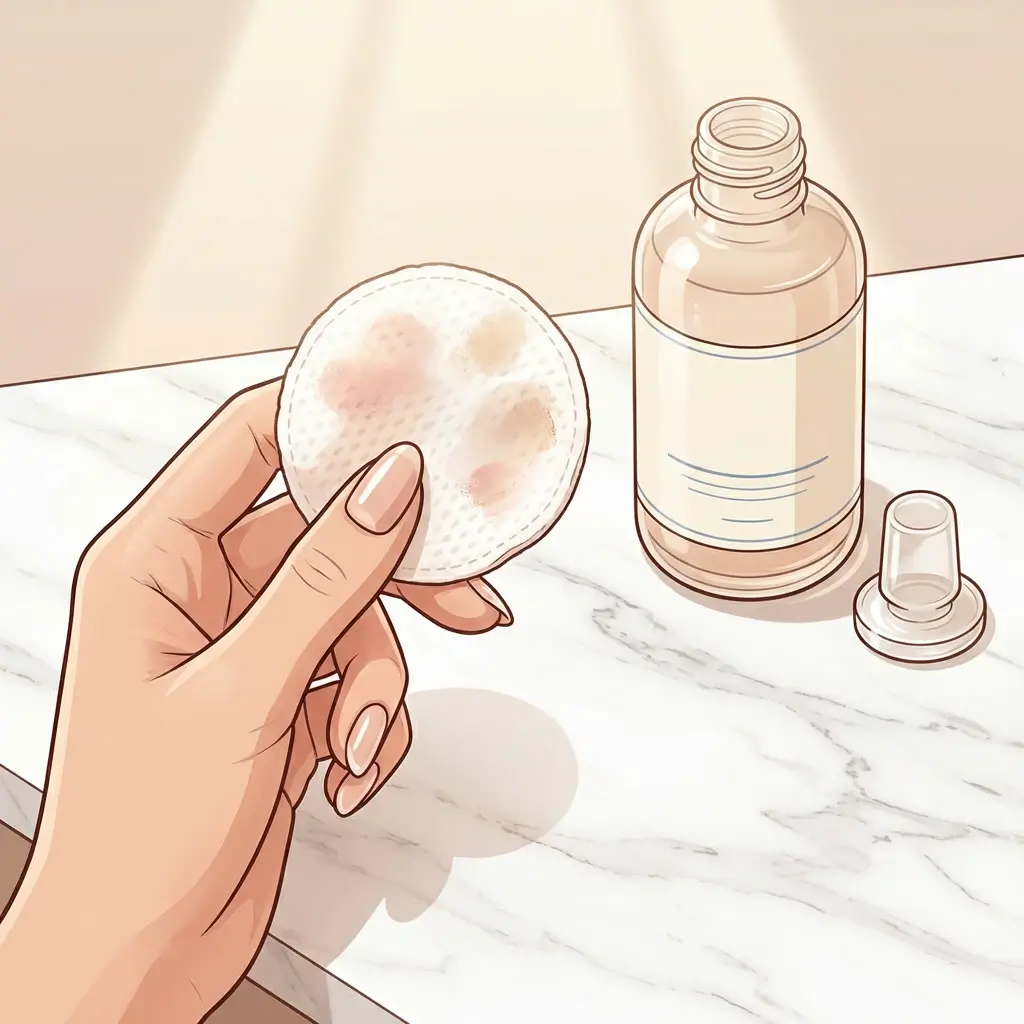
This is where the myth gets reinforced in real time. Visible peeling after using an acid feels like evidence that the product is active. And it can be. A small amount of flaking after a well-dosed acid treatment is a normal part of accelerated cell turnover.
But peeling that is widespread, persistent, or accompanied by tightness, redness, or increased sensitivity is not turnover. It is barrier damage. The skin is being stripped faster than it can rebuild, and the visible shedding is the barrier falling apart, not pigmented cells being efficiently cleared.
If the peeling is mild, brief, and your skin feels normal between applications, you are probably fine. If the peeling is constant, your skin feels tight or raw, and you need heavier moisturiser than usual to compensate, that is not progress you need to push through. That is your skin telling you to pull back before the rebound shows up.
Why this myth runs deeper than technique
Even when exfoliation is done well, at the right concentration, at the right frequency, with a healthy barrier, there is a ceiling on what surface turnover can achieve. Exfoliation clears pigmented cells that have already been made. It does not change the signals telling your melanocytes to keep making more. When someone has improved their exfoliation and still plateaus, the answer is rarely a stronger acid. It is that the production inputs are coming from somewhere exfoliation cannot reach.
But the more immediate danger of this myth is not the ceiling. It is the damage done before anyone gets there. The impulse to go harder is understandable. Pigment is slow. Patience feels passive. But on skin that pigments in response to irritation, restraint is not the passive option. It is the strategy that keeps the melanocytes calm enough for the actual fading to happen.
If exfoliation is making your skin peel constantly and your pigment is not improving, the exfoliation is not too weak. It is too much. The inflammation it creates is producing melanin faster than the turnover can clear it.


