


You had a breakout. It healed. But it left a mark that will not go away. You assume it is hyperpigmentation, because that is the word everyone uses for dark marks after acne. You buy a tyrosinase inhibitor. You start a retinoid. You wait.
Months later, the mark is still there.
The problem might not be your products or your patience. The problem might be that the mark is not hyperpigmentation at all. It might be redness, and redness is a completely different condition with a completely different mechanism that does not respond to pigment-targeting treatments.
Two marks that look similar but are not the same thing
After a breakout, a procedure, or any skin injury, your skin can be left with one of two types of marks. They sit in the same location, appear around the same time, and are both referred to casually as "dark marks" or "scarring." But they are biologically different, and treating one as though it were the other is one of the most common reasons post-breakout marks do not clear.
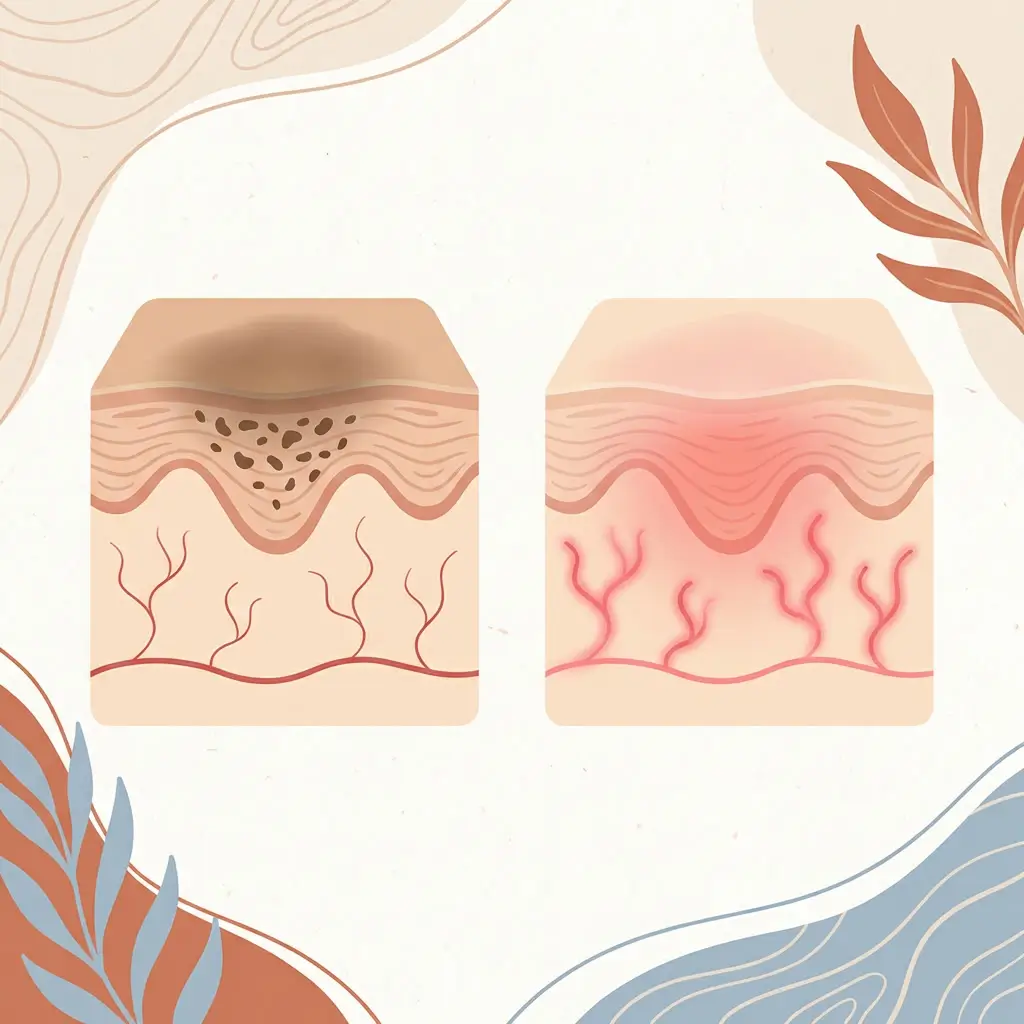
PIH: post-inflammatory hyperpigmentation
This is true pigmentation. The inflammation from the breakout activated melanocytes, which produced excess melanin and deposited it into the surrounding skin cells. The mark is brown, tan, or dark brown depending on your skin tone. It is melanin sitting in tissue.
PIH is most of the hyperpigmentation guide covers. It fades through cell turnover as the pigmented cells migrate to the surface and shed. Treatments that inhibit melanin production or accelerate turnover help it along.
PIE: post-inflammatory erythema
This is not pigmentation. It is vascular. The inflammation from the breakout damaged or dilated the small blood vessels in the area. The mark is pink, red, or purplish. It is not melanin. It is blood showing through thinned or damaged skin.
PIE does not respond to tyrosinase inhibitors, because there is no excess tyrosinase activity involved. It does not respond to retinoids the way PIH does, because the problem is not pigmented cells that need to shed. It is damaged capillaries that need to heal.
The treatments that help PIE are different: time, gentle barrier support, sometimes vascular-targeting lasers (pulsed dye laser, KTP laser), azelaic acid for its anti-inflammatory properties, and protecting the area from further irritation while the vessels repair.
Why this gets confused so often
The confusion is understandable. Both marks appear after the same type of event. Both linger. Both are flat. And in some skin tones, both can look dark enough that the colour distinction is not immediately obvious.
But the confusion is also driven by the way these marks are talked about in skincare. Almost everything gets called "hyperpigmentation" or "dark spots." Product marketing rarely distinguishes between melanin-driven marks and vascular marks, because the same brightening serums get sold for both. The nuance does not help sales.
The result is women spending months applying pigment-targeting actives to vascular marks and concluding that the products do not work, or that their skin is resistant, when the products were never designed for what they are treating.
The glass test
There is a simple way to check which one you are dealing with, and you can do it right now.
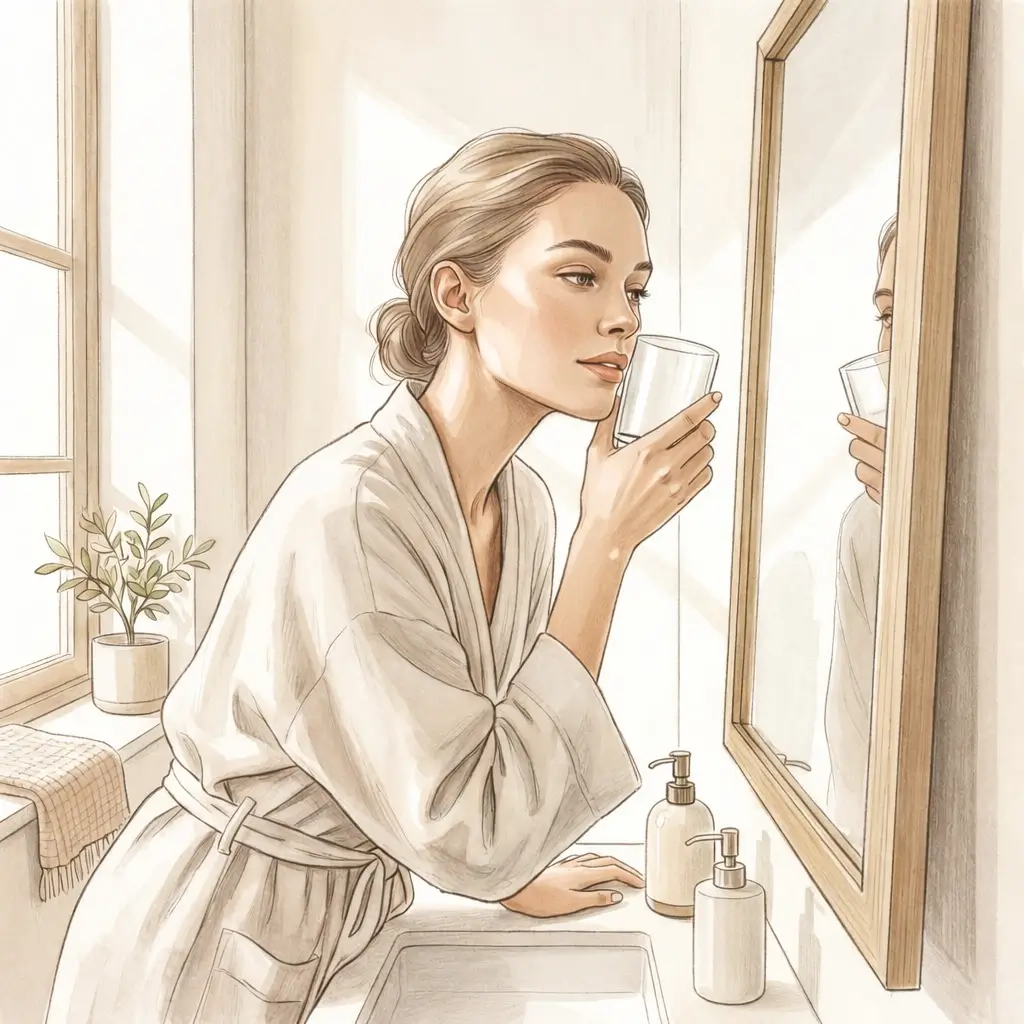
Take a clear glass or a clear plastic item (a glass tumbler works well). Press it firmly against the mark. Look through the glass while it is pressed against your skin.
If the mark fades or disappears under pressure: it is likely PIE. You are seeing blood in dilated vessels. Pressing the glass compresses the blood out of those vessels temporarily, and the colour goes away. Once you release the pressure, the blood fills back in and the mark returns.
If the mark stays visible under pressure: it is likely PIH. The colour is coming from melanin deposited in the tissue, not from blood in vessels. Melanin does not move when you press on it. The mark looks the same through the glass as it does without it.
This is not a perfect diagnostic tool. Some marks have both components (PIH and PIE together, particularly after severe or prolonged inflammation). And the test works best in good natural light where you can see colour clearly. But for most marks, it gives you a reliable initial answer.
Why fair to light skin gets confused more often
PIE is more visible in lighter skin tones. The pink and red tones of damaged blood vessels show through paler skin more clearly. In deeper skin tones, the melanin in the surrounding skin partially masks the vascular redness, which means post-breakout marks in darker skin are more likely to present as visibly brown (PIH) even if there is a vascular component underneath.
This creates a pattern. Women with lighter skin are more likely to have post-breakout marks that are predominantly PIE but look "dark" enough to be mistaken for hyperpigmentation. They buy brightening products. The products do not work. They assume the pigmentation is stubborn.
It is not stubborn. It is not pigmentation.
Women with medium to deep skin tones can also develop PIE, but it is harder to see against the surrounding skin, and PIH tends to dominate the visible picture. In these cases, the marks are usually being treated correctly as pigmentation, though a vascular component may still be present and worth addressing.
Why the distinction matters for treatment
This is not academic. Getting this wrong costs months.
If the mark is PIH, the standard approach works: sun protection, tyrosinase inhibitors, retinoids to accelerate turnover, time. The pigmented cells will eventually shed. The treatments help them shed faster. The PIH treatment guide covers this in detail.
If the mark is PIE, that approach does not address the problem. The vessels need to heal. The most effective interventions for PIE are time (many PIE marks resolve on their own within 6 to 12 months), gentle barrier-supporting skincare that does not irritate the area further, azelaic acid for inflammation, and in persistent cases, vascular-targeting laser treatments.
The overlap is sun protection (UV can worsen both) and azelaic acid (anti-inflammatory and mildly anti-pigment, helpful for both). Everything else diverges.
If you have been treating a mark for months with pigment-targeting actives and seeing no improvement, do the glass test before changing your routine. The answer might not be a stronger product. It might be a completely different condition.
What if both are present
It is possible, and not uncommon, to have both PIH and PIE in the same area. Severe or prolonged inflammation (deep cystic acne, aggressive procedures, extended irritation) can damage blood vessels and activate melanocytes simultaneously.
In these cases, the mark may show characteristics of both: a brownish tone from the melanin plus a pinkish undertone from the vascular damage. The glass test will partially fade it (the vascular component disappears, the pigment component remains visible).
If both are present, the vascular component often resolves first, because the body gradually repairs the damaged vessels. Once the redness clears, the remaining brown mark is pure PIH and can be treated accordingly. Patience in the early months, while the vascular component heals on its own, often simplifies the treatment picture considerably.
What to take from this
The difference between PIH and PIE is one of the most practically useful distinctions you can learn about your skin. It takes thirty seconds to check. It can save months of misdirected treatment. And it is almost never explained clearly in the product marketing or skincare advice that most people rely on.
If the mark is brown and stays visible under pressure, it is pigment. Treat it as pigmentation.
If the mark fades under pressure, it is vascular. Stop treating it as pigmentation. Support the skin, protect the area, and give the vessels time to heal.
The most important step in treatment is making sure you are treating the right thing.


