


Every form of hyperpigmentation is influenced by UV. Not just triggered. Sustained, deepened, reactivated. A melasma patch that had been fading for weeks can darken again after a single afternoon of unprotected exposure. A PIH mark that should have cleared months ago persists because the UV reaching it every day keeps the melanocytes active.
UV is the one trigger that crosses every type, every skin tone, every treatment plan. Other triggers are conditional. UV is constant. Understanding how it actually works at the cellular level changes how you think about everything else in the treatment framework, because every other layer of treatment is operating underneath whatever UV is doing on top.
Two wavelengths, two pathways
Sunlight delivers UV radiation in two ranges that reach the skin. UVB (280 to 320nm) and UVA (320 to 400nm). They stimulate pigmentation through different mechanisms, at different depths, and on different timescales. Both matter. They matter differently.
UVB is the wavelength most people associate with sun damage. It is absorbed primarily in the epidermis, the outermost layer of skin, where it directly damages DNA in keratinocytes and melanocytes. That DNA damage triggers a protective response: the melanocytes produce more melanin to shield the nucleus from further harm. This is the tanning response. It is also the mechanism behind sunburn-driven pigmentation. UVB's effects are acute and dose-dependent. Stronger exposure produces a stronger response.
UVA penetrates deeper. It reaches the dermis, where it does not cause the dramatic DNA breaks that UVB does but generates something more insidious: reactive oxygen species (ROS). These are unstable molecules that damage cellular structures through oxidative stress. UVA-generated ROS activate melanocytes through signalling pathways that are separate from the direct DNA-damage route. The pigment response to UVA is less visible in the short term but more persistent, because oxidative damage accumulates without the obvious warning signal of redness or burn.
This matters practically. UVB peaks at midday, is partially blocked by glass, and is strongest in summer. UVA is relatively constant throughout daylight hours, penetrates cloud cover and windows, and is present year-round at meaningful levels. A person who avoids midday sun but sits near a window for eight hours a day is avoiding most UVB while receiving sustained UVA exposure. The melanocytes register both.
Acute damage versus cumulative exposure
The distinction between a single intense UV event and ongoing low-level exposure is fundamental to how pigmentation develops and persists. They produce different patterns, through partially overlapping mechanisms, and the treatment implications are different.
Acute UV exposure, the kind that produces visible redness or sunburn, triggers a rapid inflammatory response. The skin mounts an emergency response. Inflammatory mediators flood the area. Melanocytes go into overdrive, producing melanin to protect underlying tissue from further damage. The pigmentation that results is fast, localised, and often dramatic. It can fade as the inflammation resolves, or it can become persistent if the exposure was severe or if the skin tone leans towards a strong melanocyte response.
Cumulative exposure is quieter and more consequential. Low-level UV, the kind you barely notice, accumulates over weeks and months. Each individual exposure is below the threshold for visible redness. But each one generates a small amount of oxidative stress, a small increase in melanocyte signalling, a small push toward increased pigment production. None of these individual exposures would produce a visible mark on their own.
Over time, they change the baseline.
Melanocytes that have been receiving low-level UV stimulation for months or years develop what researchers describe as a lower activation threshold. They become more reactive. A UV dose that would have produced no visible pigment response in unexposed skin now produces a measurable one. This is why hyperpigmentation often worsens gradually over years, why melasma can appear without a single identifiable sun event, and why pigmentation seems to "come from nowhere" in skin that has never burned.
It did not come from nowhere. It came from cumulative exposure that quietly shifted the melanocyte set point.
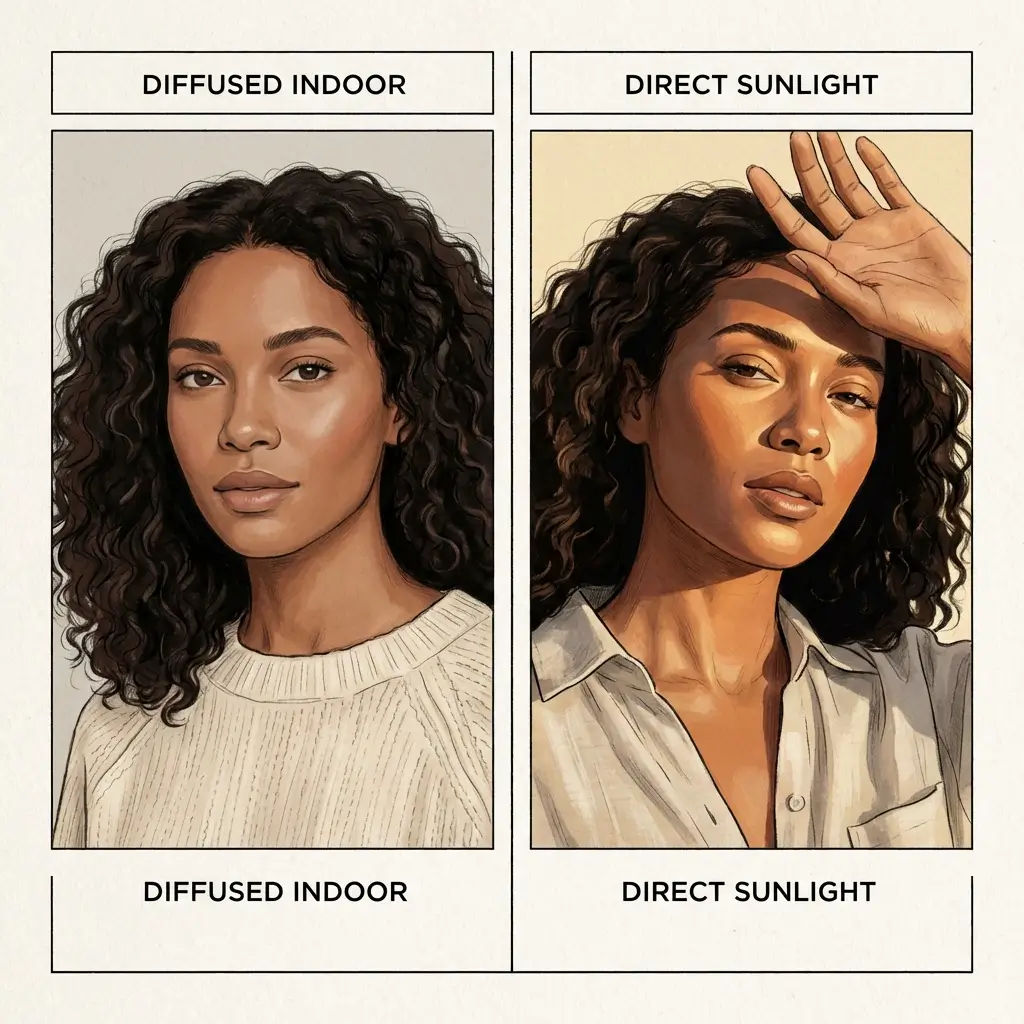
Why UV darkens what is already there
UV does not only trigger new pigmentation. It actively worsens existing marks. This is one of the most practically important aspects of the UV-pigment relationship and one of the least clearly explained.
Melanin itself absorbs UV. That is its function. When a PIH mark or a melasma patch contains excess melanin, that concentrated pigment absorbs more UV energy per unit of skin than the surrounding area. The absorbed energy generates more ROS locally. More ROS means more oxidative signalling. More oxidative signalling means more melanocyte activation in that specific area. The mark gets darker while the surrounding skin stays the same.
This creates a feedback loop. The pigmented area absorbs more UV. The increased absorption generates more oxidative stress. The oxidative stress drives more melanin production. The additional melanin absorbs even more UV. Each cycle of exposure reinforces the mark.
This is why marks that should be fading often stall or darken despite an active treatment routine. The topical is working to suppress melanin production. The UV exposure is simultaneously stimulating it. If the UV stimulus is strong enough or consistent enough, it can outpace the topical, and the mark appears to resist treatment when it is actually being continuously re-darkened.
The practical consequence is blunt. No topical brightening ingredient can outperform unmanaged UV exposure. Not vitamin C. Not hydroquinone. Not tranexamic acid. The mechanism is too direct and too persistent. Protection is not a supporting measure in pigmentation treatment. It is the precondition. Prevention covers the specifics of what adequate protection looks like in practice.
But protection only controls how much UV reaches the melanocytes. It does not determine what happens once it gets through, and some always does. That response has its own variables, and not all of them are on the surface.
What determines the severity of the response
If you follow the UV-to-pigment chain closely, the mediating step is almost always oxidative stress. UVB triggers melanogenesis through direct DNA damage. UVA triggers it through ROS. Cumulative exposure lowers the melanocyte threshold through sustained oxidative load. Existing pigment amplifies local ROS production. Oxidative stress is the common pathway.
That means the severity of the pigment response to a given UV dose is not fixed. It depends on how effectively the skin neutralises the ROS before they reach the melanocyte signalling threshold. Two people can receive the same UV exposure and produce meaningfully different pigment responses, not because their melanocytes are inherently different, but because their antioxidant capacity is different.
Glutathione is the most directly relevant molecule. It is the skin's primary intracellular antioxidant, but it also plays a specific role in pigmentation: it directly inhibits tyrosinase and shifts melanin production toward lighter forms. UV exposure depletes glutathione. When levels drop, both the antioxidant protection and the pigment-specific effects diminish. The melanocyte response to the same stimulus becomes stronger.
Other enzymatic defences (superoxide dismutase, catalase) form the front line that intercepts ROS before they accumulate. When these systems are overwhelmed, the oxidative response proceeds further, and the downstream signalling that activates melanocytes is stronger.
These are not abstract systems. They are measurably depleted by UV and measurably influenced by nutrient availability. Glutathione synthesis requires specific amino acid precursors. Its regeneration depends on vitamin C. The enzymatic defences depend on zinc and selenium as cofactors. When systemic availability of these inputs is insufficient, the skin's capacity to buffer UV-generated oxidative stress is reduced. The same UV dose produces a stronger pigment response.
Kallistia's Hyperpigmentation Cleanse is formulated around this specific bottleneck: the antioxidant precursors and cofactors that the skin's UV-defence system draws on to buffer oxidative stress before it reaches the melanocyte activation threshold. For UV-driven pigmentation, the internal layer is not about melanin regulation. It is about the capacity that determines how much melanin a given UV exposure actually produces.

Why this mechanism matters for treatment
Most treatment guides present UV protection as a practical step: wear sunscreen, avoid peak hours. That framing is correct but incomplete.
UV does not merely slow treatment. It actively opposes it. Every unprotected exposure is a direct input into the same signalling pathway that the topical routine is trying to suppress. The marks that bother you most are the ones UV affects most, because the concentrated melanin in those areas absorbs more energy and generates more local oxidative stress.
Cumulative exposure matters as much as acute events. A person who never burns but gets moderate daily UV through windows, commuting, and incidental outdoor time is receiving a sustained oxidative load that shifts melanocyte behaviour over months. The absence of sunburn does not indicate the absence of UV-driven pigmentation. This is also why actives that increase photosensitivity, including the exfoliants and retinoids commonly used for pigmentation, carry a specific UV-related risk that backfire risk covers in detail.
The takeaway
UV activates pigmentation through direct DNA damage, oxidative stress, and cumulative threshold shifts in melanocyte reactivity. It darkens existing marks through a feedback loop of absorption and local ROS amplification. It is the only trigger that is both universal and continuous.
How much pigment a given UV dose produces depends on two things: how much UV reaches the melanocytes, and how effectively the skin neutralises the oxidative stress it generates. Protection addresses the first. Systemic antioxidant capacity addresses the second. Both are modifiable. Every other treatment decision operates downstream of this.


