


The supplement market for hyperpigmentation is growing fast, and most of what's out there is noise. Vague claims about "skin brightening from within," ingredient lists padded with things that have no meaningful evidence for pigmentation, and dosages too low to do anything except justify the label.
There are ingredients with genuine research behind them. Compounds that influence melanin production, inflammation, oxidative stress, and photoprotection in ways that topical treatments can't reach. The evidence isn't as deep as it is for topical actives. It's real, and it's building.
Oral Photoprotection
Polypodium leucotomos extract is the most studied oral photoprotectant for pigmentation. Derived from a tropical fern, it has demonstrated the ability to reduce UV-induced skin damage, lower the inflammatory response to sun exposure, and decrease melanin production triggered by ultraviolet radiation.
Multiple clinical studies have shown that oral Polypodium leucotomos can reduce the intensity of UV-induced pigmentation, particularly when used alongside topical sunscreen. It doesn't replace sunscreen. It adds a secondary layer of internal defence that supports the skin from within when UV exposure does occur.
For melasma specifically, several trials have found that adding Polypodium leucotomos to a standard topical regimen produced greater improvement than topical treatment alone. It's one of the few oral supplements with pigmentation-specific clinical data.
Dosage matters. Most of the positive research uses concentrated extracts (often 240mg to 480mg daily of standardised extract). Products using low doses or non-standardised powder may not replicate those results.
Tyrosinase Inhibitors (Oral)
Tyrosinase is the enzyme that drives melanin production. Topical tyrosinase inhibitors (like hydroquinone, arbutin, and kojic acid) are well established. Oral versions are less studied but gaining attention.
Licorice root extract is the most notable in this category. The active compound glabridin has demonstrated tyrosinase-inhibiting activity in laboratory studies, and licorice has a long history of traditional use for skin brightening. The evidence for oral supplementation specifically is still developing, but the mechanism is well understood and the safety profile is strong at standard doses.
Other botanical extracts with preliminary tyrosinase-related evidence include mulberry extract and certain mushroom-derived compounds, though the clinical data for oral use in humans is limited.
Antioxidants
Oxidative stress is one of the key pathways linking UV exposure, inflammation, and melanin production. Antioxidants that can meaningfully reduce systemic oxidative stress have the potential to lower one of the persistent internal signals driving pigmentation.
The categories with the most relevance to pigmentation:
Vitamin C. Well-documented antioxidant with direct relevance to melanin pathways. Oral vitamin C supports what topical vitamin C is already doing on the surface. Dual-source forms (ascorbic acid combined with plant-derived sources like amla fruit) can improve absorption and utilisation.
Polyphenols. A broad category that includes compounds from green tea (EGCG), pomegranate extract, and grape seed extract. These have demonstrated anti-inflammatory and antioxidant effects that are relevant to pigmentation pathways. EGCG from green tea and white tea has some of the strongest evidence in this group, with studies showing effects on melanocyte activity and UV-induced damage.
Resveratrol. Found naturally in grapes and Japanese knotweed, resveratrol has shown both antioxidant and direct pigment-reducing properties in research. It appears to influence melanin production through multiple pathways, including tyrosinase inhibition and reduction of oxidative signalling. The research is largely preclinical, but it's consistent and growing.
Vitamin E. Works synergistically with vitamin C to protect cell membranes from oxidative damage. On its own, the evidence for pigmentation is modest. As part of an antioxidant combination, it contributes meaningfully.
Coenzyme Q10. Supports mitochondrial function and cellular energy production. Its role in pigmentation is indirect but relevant: cells under oxidative stress behave differently, and CoQ10 helps maintain normal cellular function under that stress.

Micronutrient Foundations
Some of the most important supplements for pigmentation aren't exotic compounds. They're basic micronutrients that many people are mildly deficient in, and those deficiencies can quietly influence how the skin behaves.
Zinc plays a role in immune regulation, wound healing, and inflammation control. Zinc deficiency has been associated with impaired skin repair and increased inflammatory sensitivity. For pigmentation, its primary relevance is supporting the skin's ability to recover from triggers without overproducing melanin.
Selenium supports one of the body's primary antioxidant enzymes (glutathione peroxidase), which helps keep oxidative stress in check. Low selenium levels have been linked to increased UV sensitivity and reduced skin resilience.
Vitamin D3 has a complex relationship with pigmentation. Deficiency is common (especially in people with darker skin tones, where melanin reduces the skin's vitamin D synthesis capacity) and has been associated with increased inflammatory markers. Supplementing to adequate levels is widely recommended as a baseline.
B vitamins (particularly riboflavin and B12) support energy metabolism and cellular repair processes. They're rarely discussed in pigmentation specifically, but deficiencies can impair the skin's ability to function normally, which indirectly affects how it handles triggers.
What's Overhyped
A few things that appear frequently in pigmentation supplements but have limited evidence for that specific purpose.
Biotin is the most common example. It's in almost everything marketed for skin, hair, and nails, but the evidence for any effect on pigmentation is essentially nonexistent. Unless there's a diagnosed deficiency, supplementing biotin for hyperpigmentation has no meaningful rationale.
Collagen supplements are another. They may support skin hydration and elasticity, but the connection to melanin production or pigmentation pathways is not established. They're not harmful, but they're not targeted either.
Turmeric (curcumin) generates a lot of interest because of its anti-inflammatory reputation. The in vitro evidence is promising, but oral bioavailability is notoriously poor. Most standard turmeric supplements deliver very little active curcumin to the bloodstream without specific formulation enhancements (like piperine or liposomal delivery). The gap between the laboratory evidence and what a capsule actually delivers is wide.
How to Evaluate Quality
Not all supplements are made equally, and in pigmentation specifically, the difference between an effective product and an ineffective one often comes down to formulation details that aren't obvious on the front label.
- Standardised extracts vs. raw powders. A "500mg licorice root" capsule could mean very different things depending on whether it's standardised for glabridin content or simply ground root. Look for extraction ratios (e.g. 3:1, 10:1) and standardisation percentages.
- Dosages that match the research. Check whether the amounts per serving align with the doses used in studies, not just whether the ingredient is listed. Many products include clinically relevant ingredients at doses too low to replicate the studied effects.
- Third-party testing and manufacturing standards. CGMP certification and third-party testing for purity and potency are baseline indicators of a trustworthy product. They don't guarantee effectiveness, but they rule out a lot of poor-quality options.
- Ingredient synergy. The most thoughtful formulations combine ingredients that work on different pathways (photoprotection, antioxidant, anti-inflammatory, tyrosinase inhibition) rather than loading up on a single mechanism.
Realistic Timelines
Supplements work on a different timeline to topicals. They influence what's happening internally, and those changes take time to show up in the skin.
A reasonable timeline for noticing early changes (smoother-looking tone, reduced reactivity, less new pigment forming) is 4 to 6 weeks of consistent daily use. More significant visible improvement in existing pigmentation typically requires 8 to 12 weeks, sometimes longer for deep or hormonally driven pigment like melasma.
Supplements work best as part of a broader approach. On their own, the effects are real. Combined with topical actives, sun protection, and trigger management, they contribute to a compounding effect that's greater than any single intervention alone. That's the logic behind building an internal support layer alongside everything you're already doing on the surface.
Safety and Interactions
Most of the ingredients discussed above have strong safety profiles at standard supplementation doses. But a few things are worth being aware of.
Licorice root in very high doses or over prolonged periods can affect blood pressure and potassium levels. At the doses used in skin-focused supplements (typically under 500mg of extract), this is rarely a concern, but it's worth noting for anyone on blood pressure medication.
Polypodium leucotomos is well tolerated in studies, with minimal reported side effects. It does not replace sunscreen and should not be treated as a standalone UV protection strategy.
Zinc at high doses over long periods can interfere with copper absorption. Products that keep zinc at or near the recommended daily value (8 to 11mg) avoid this issue.
Anyone pregnant, breastfeeding, on prescription medication, or managing a chronic health condition should consult a healthcare professional before starting any new supplement regimen. This is standard guidance but it genuinely applies here.
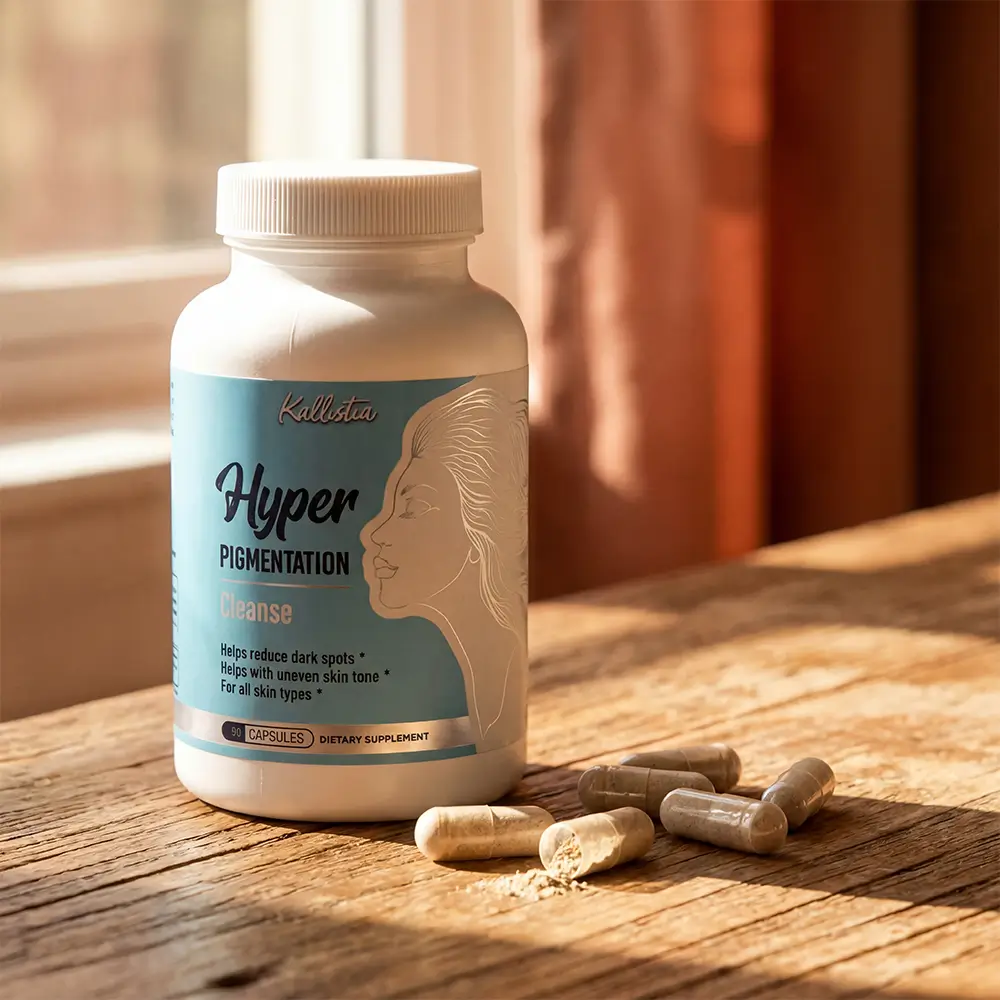
The Kallistia Hyperpigmentation Cleanse
This is the product we made, and this is why it exists.
Most supplements marketed for skin are either single-pathway (just antioxidants, or just vitamins) or so broadly formulated that nothing is dosed meaningfully. We wanted to build something that combined multiple evidence-based mechanisms in one product, at doses that actually reflect the research, without filler ingredients that look good on a label but don't do anything for pigmentation.
The Hyperpigmentation Cleanse is built around the same categories covered above:
- Oral photoprotection: standardised Polypodium leucotomos extract
- Tyrosinase regulation: licorice root extract
- Antioxidant and pigment-reducing support: white tea (EGCG), pomegranate, resveratrol
- Micronutrient foundations: vitamin C, vitamin D3, zinc, selenium, B vitamins
- Inflammatory and stress management: adaptogenic and mitochondrial support
A full ingredient and dosage breakdown is available on the product page.
Two capsules a day. 45 servings per bottle. Vegan, cruelty-free, made in a CGMP-certified facility with third-party testing on every batch.
Most people notice early changes (smoother-looking tone, less visible blotchiness) within 4 to 6 weeks of consistent use. For deeper or more stubborn pigmentation, 8 to 12 weeks is a more realistic window for meaningful visible improvement.
Everything here applies regardless of which product someone chooses. But this is the formulation we believe in, and the evidence and formulation standards outlined above are the same ones we used to build it.
The Takeaway
Supplements for hyperpigmentation are not a magic fix. They're one layer in a broader approach, and they work best when combined with topical actives, consistent sun protection, and an understanding of what's actually driving the pigment.
The ingredients that matter most for pigmentation have real evidence behind them: oral photoprotectants, targeted antioxidants, tyrosinase inhibitors, and foundational micronutrients. The ones that don't (biotin, generic collagen, underdosed turmeric) are easy to spot once the framework is clear.
Choosing a supplement should come down to the same questions as choosing any other treatment: does it target the right pathways, is it dosed properly, and is it made by someone who can demonstrate quality? Everything else is packaging.


