


For most people, over-the-counter topicals are the first real step toward treating hyperpigmentation. They're accessible, they don't require a prescription or a clinic visit, and when chosen well, they can make a genuine difference.
But the category is enormous. A search for "hyperpigmentation serum" returns hundreds of products, each claiming to brighten, fade, correct, or transform. The ingredients overlap, the marketing blurs together, and it's not always clear what's doing what or whether a product is the right starting point for a particular type of pigmentation.
What follows is an orientation to the main active categories used in OTC hyperpigmentation products: what they do, how they work at a high level, what to expect, and where the limits are. For the deeper biology behind each ingredient, Hyperpigmentation Ingredients covers them individually.

Vitamin C
Vitamin C (most commonly as L-ascorbic acid) is one of the most widely used actives for hyperpigmentation. It works primarily as an antioxidant, interrupting the oxidative stress pathway that triggers melanin production. It also has some direct effect on tyrosinase, the enzyme responsible for producing melanin.
Results tend to be gradual. Most people notice a general evening of tone before specific dark spots begin to shift. Consistency matters more than concentration, and higher isn't always better. Formulations in the 10 to 20% range are the most commonly supported by research.
Vitamin C is notoriously unstable. It oxidises with exposure to air and light, which is why formulation and packaging matter as much as the ingredient itself. A product that's turned dark orange or brown has likely degraded past the point of usefulness.
It pairs well with sunscreen (the antioxidant protection complements UV filtering) and is generally well tolerated, though some forms can cause mild irritation on sensitive skin.
Niacinamide
Niacinamide (vitamin B3) works differently from most other brightening actives. Rather than suppressing melanin production directly, it interferes with the transfer of melanin from melanocytes to the surrounding skin cells. Pigment is still being made, but less of it reaches the surface.
This mechanism makes niacinamide one of the gentler options available. It rarely causes irritation, supports barrier function, and has anti-inflammatory properties that can help with the kind of low-grade inflammation that keeps pigmentation cycling.
It's commonly found at concentrations of 2 to 10%, and it layers easily with most other actives. Results are real but tend to be subtle and cumulative. For someone looking for a low-risk starting point, niacinamide is often a good fit.
Tranexamic Acid
Tranexamic acid has gained significant attention in recent years, particularly for melasma. Originally used in medicine to reduce bleeding, its relevance for pigmentation lies in its ability to disrupt the interaction between UV damage, inflammation, and melanocyte activation.
It works by blocking plasmin, a compound involved in the inflammatory response that triggers melanin production. This makes it especially useful for pigmentation that has an inflammatory or hormonal component, rather than purely UV-driven darkening.
In OTC formulations, tranexamic acid is typically found at 2 to 5% in serums. It's generally well tolerated and doesn't cause the irritation associated with exfoliating acids or retinoids. The research on topical tranexamic acid is still growing, but early results have been encouraging, particularly when used alongside other actives.
Azelaic Acid
Azelaic acid sits in an interesting space. At OTC concentrations (typically 10%), it offers mild tyrosinase inhibition alongside anti-inflammatory and antibacterial benefits. At prescription strength (15 to 20%), it becomes a more targeted treatment for both pigmentation and conditions like rosacea.
Its strength as an OTC option is its tolerability. It's one of the few brightening actives considered safe during pregnancy (though always worth confirming with a doctor), and it tends to cause less irritation than acids or retinoids at comparable effectiveness levels.
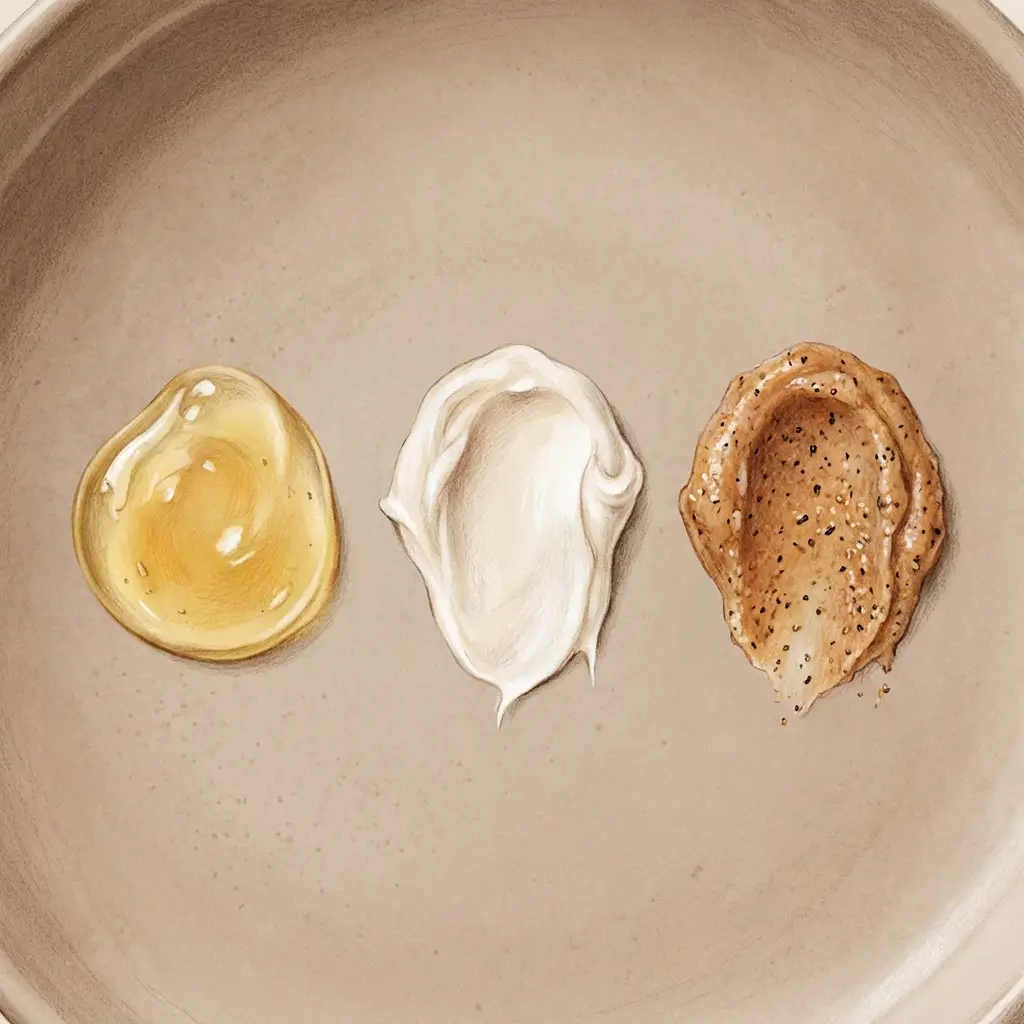
Texture can be a barrier for some people. Many azelaic acid formulations have a slightly gritty or silicone-heavy feel that takes some getting used to. The active itself is effective, but the experience of using it varies a lot depending on the product.
Alpha Arbutin
Alpha arbutin is a derivative of hydroquinone, but it behaves much more gently. It inhibits tyrosinase in a slower, more controlled way, which means lower risk of irritation and rebound but also a longer timeline to visible results.
It's generally found at 1 to 2% in serums and is well tolerated across most skin types. For people who are wary of hydroquinone's side effect profile (or who can't access it without a prescription), alpha arbutin offers a milder version of the same mechanism.
It works best as part of a combination approach rather than a standalone treatment. On its own, the effects are modest. Paired with vitamin C, niacinamide, or sunscreen-forward routines, it contributes meaningfully.
Retinoids (OTC)
Over-the-counter retinoids (retinol, retinaldehyde, retinyl palmitate, and various encapsulated forms) accelerate cell turnover. They don't target melanin directly. Instead, they speed up the process by which pigmented cells are shed and replaced by newer, less pigmented ones.
This makes them effective for surface-level hyperpigmentation, particularly post-inflammatory marks that sit in the upper layers of the epidermis. For deeper pigment, their impact is more limited.
The challenge with retinoids is the adjustment period. In the early weeks, they commonly cause dryness, peeling, and mild irritation. For pigment-prone skin, that irritation can temporarily worsen darkening before improvement begins. This is the catch-22 covered in why treatments sometimes make pigment worse.
Starting with a low concentration, using it every second or third night initially, and pairing with a solid moisturiser are the most common strategies for reducing that early irritation window.
AHAs (Alpha Hydroxy Acids)
AHAs, primarily glycolic acid and lactic acid, work through chemical exfoliation. They dissolve the bonds between dead skin cells on the surface, encouraging faster turnover and helping pigmented cells clear more quickly.
Glycolic acid has the smallest molecular size, which means it penetrates more deeply and works faster, but also carries more irritation potential. Lactic acid is larger, gentler, and also has mild hydrating properties, which makes it a better fit for sensitive or dry skin.
Both are available in a wide range of concentrations in OTC products, from gentle daily toners (5 to 8%) to stronger weekly treatments (10 to 30%). The higher end of that range starts to approach professional peel territory and should be used carefully, particularly on skin that's already reactive or actively pigmented.
Worth noting: AHAs increase photosensitivity. Without consistent, thorough sun protection, exfoliating acids can make pigmentation worse rather than better. This is one of the most common ways people accidentally undermine their own routine.
Starting Out
The biggest mistake people make with OTC topicals isn't choosing the wrong product. It's starting too many at once, using them too aggressively, or expecting visible change within days.
A few principles that hold across all the categories above:
- Introduce one new active at a time and give it at least 4 to 6 weeks before assessing
- Start with the lowest effective concentration, especially with retinoids and AHAs
- Sunscreen is not optional alongside any of these. Every one of them works better on protected skin, and some actively increase UV sensitivity
- Monitor for irritation, not just improvement. If the skin becomes red, tight, or reactive, scale back before adding anything else
- Consistency at a tolerable level beats intensity that causes setbacks
There's no single correct product to start with. For someone who's never used actives for pigmentation before, vitamin C or niacinamide tend to be the most forgiving entry points. For someone with more experience and resilient skin, a retinoid or azelaic acid may be appropriate from the outset. The safe topical use guide covers how to layer and sequence actives without overwhelming the skin.
What to Realistically Expect
OTC topicals work. But they work slowly, and they work best on certain types of pigmentation.
Surface-level pigmentation (recent post-inflammatory marks, mild sun damage, early-stage uneven tone) tends to respond most noticeably. Deeper pigment, hormonal pigmentation like melasma, and older established marks typically require either prescription-strength products, clinical procedures, or both.
Timelines vary, but a reasonable window for visible improvement with consistent OTC use is 8 to 12 weeks. Some actives show earlier signs of change, others take longer. If nothing has shifted after 3 months of consistent, correct use, it may be worth exploring whether the pigment sits deeper than topicals can reach, or whether a different approach is needed.
Where topicals hit their ceiling
Every ingredient on this list works at the surface. Tyrosinase inhibitors suppress the enzyme. Exfoliants clear pigmented cells. Antioxidants neutralise oxidative triggers in the skin. They're all operating on the output end of the pigment process.
But melanocytes don't make their production decisions in isolation. They respond to signals from deeper in the body: systemic inflammation, oxidative stress, hormonal shifts, nutrient status. When those signals are elevated, melanocytes are already running above baseline before a single topical touches the skin. The topical suppresses output at the surface. The signalling environment underneath keeps telling the cells to produce.
This is why someone can use a well-chosen combination of actives for months and see genuine improvement, only for it to stall or partially reverse. The topicals did their job. The signals they couldn't reach were still running. Why brightening ingredients plateau explains the biology behind that ceiling in more detail.
OTC topicals are rarely the whole answer. But for many people, they're the right place to start, and when combined with strong protection habits and attention to what's happening beneath the surface, they can do meaningful work.
The ingredients clear the pigment your skin has already made. Whether it keeps making more depends on what's driving the signal underneath.


