


You know those dark patches that show up exactly where your bra strap sits, where your jeans dig in, or along your bikini line after shaving? The ones that trace the friction like a map? That is mechanical trauma pigment, and it is one of the most treatable forms of hyperpigmentation you can have. The catch is that most people skip the one step that matters most and go straight to products.
The most effective thing you can do for this type of pigment is not a serum. It is figuring out what is rubbing, pulling, or pressing on your skin and changing that.
Why this pigment plays by different rules
Your skin reads repetitive friction as low-grade injury. Every time fabric drags across the same spot or a razor pulls at the same strip of skin, your body sends the same message: protect this area. That message triggers inflammation, and inflammation tells your melanocytes to flood the zone with pigment. Do that enough times and you get a dark mark that looks permanent but is actually just your skin stuck in a loop.
The reason this is good news is that the trigger is external. You can find it, name it, and stop it. That is a completely different situation to something like melasma, where the signals are hormonal and much harder to control. With friction pigment, the moment you break the loop, your skin can start recovering on its own.
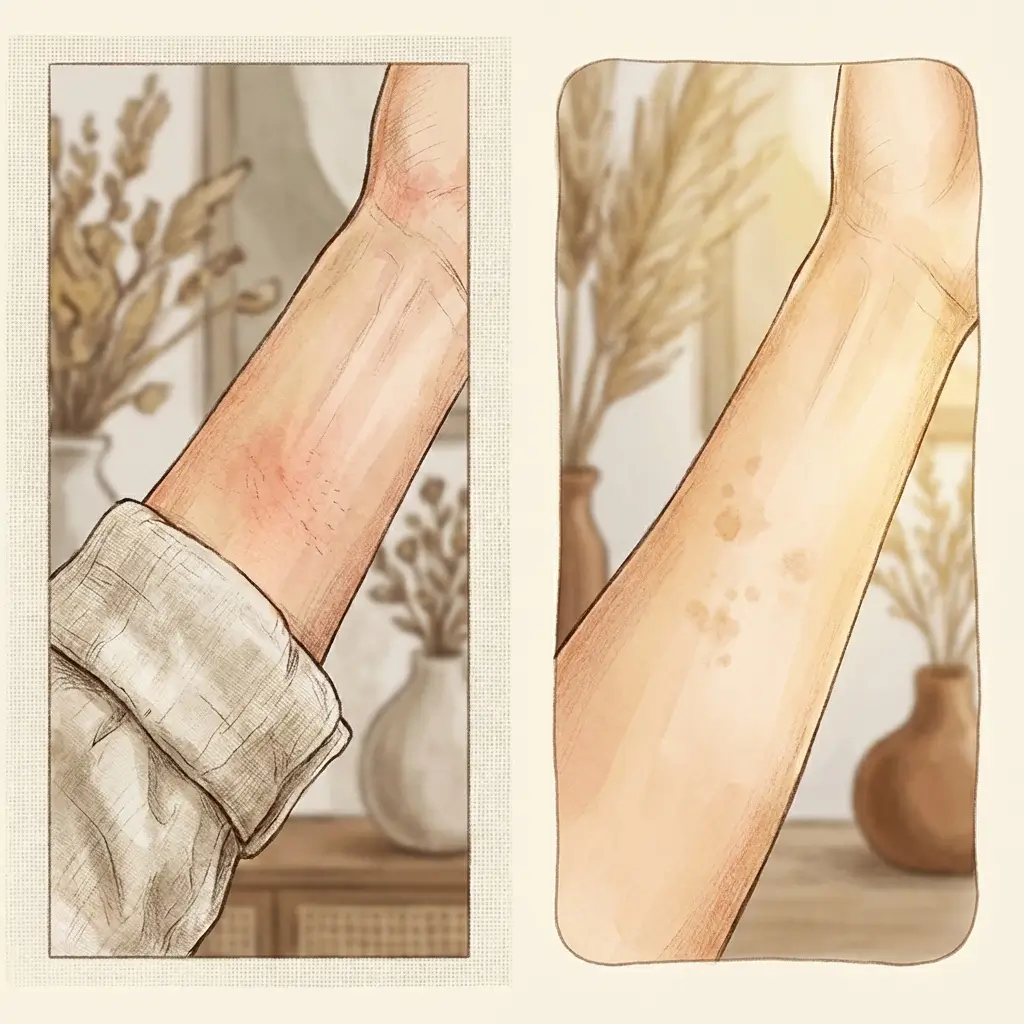
First move: find the friction
Before anything else, audit the source. This feels almost too simple to be useful, but it is genuinely the most powerful intervention.
- Clothing pressure (waistbands, bra straps, elastic edges): softer fabrics, looser fits, seamless construction. Even a small reduction changes the daily input your skin is receiving.
- Shaving: switch to a single-blade razor or a trimmer, go with the grain, and use a barrier layer like oil or fragrance-free shave cream. The goal is less drag.
- Waxing: hot wax on reactive or melanin-rich skin is a double hit of mechanical pull and heat-triggered inflammation. If you are seeing pigment along your wax lines, hard wax with an experienced aesthetician is the minimum adjustment. Laser hair removal sidesteps the mechanical issue entirely.
- Chafing: anti-chafe balms, longer inseams, moisture-wicking fabric. Especially in summer when sweat makes everything worse.
You do not need to eliminate every friction source in your life. You just need to bring it below the threshold where your melanocytes keep getting reactivated.
What happens once the friction stops
Your skin stops receiving the "protect this area" signal and shifts out of defence mode. The inflammatory response that was keeping your melanocytes in overdrive starts to wind down, and natural cell turnover begins pushing pigmented skin cells toward the surface and eventually off.
This takes time. Epidermal turnover runs on roughly a four-week cycle and slows as you get older, so you are looking at weeks to months, not days. But the biology is finally moving in your direction instead of against you.
The other encouraging thing is that friction pigment usually stays epidermal, meaning it is sitting in the upper layers of your skin rather than having dropped into the dermis. Dermal pigment is a much harder problem. Friction marks caught before that drop happens have a genuinely good prognosis.
Supporting recovery from the inside
This is the part almost no one talks about, and it matters more than people think.
Removing the friction stops the external trigger, but the inflammatory environment beneath your skin does not switch off overnight. That signalling built up over weeks or months of repeated irritation, and it lingers. This is why so many people remove the trigger, wait, and feel like nothing is happening. The surface cause is gone, but the deeper noise has not caught up yet.
Internal support addresses exactly that. The biochemical environment your melanocytes sit in is deeper than any topical can reach. Antioxidants that reduce oxidative stress, nutrients that support your body's natural inflammatory resolution, and compounds that influence melanocyte signalling can genuinely shift how fast your skin recalibrates. Removing friction takes your foot off the accelerator; internal support helps the brakes actually work.
This is why we built our Hyperpigmentation Cleanse capsules around these internal pathways. When the friction is gone, they help close the gap between trigger removal and visible clearing.

A note on topicals
If you want a topical in the mix, niacinamide, azelaic acid, and mandelic acid are all reasonable options for skin that has been under mechanical stress. Pick one, keep it gentle, and do not stack them.
The bigger thing to be aware of is that skin that has been repeatedly rubbed or abraded is already sensitised. The aggressive brightening actives that dominate the hyperpigmentation market can re-trigger the exact inflammatory cycle you just worked to stop. This is the trap a lot of women fall into: friction caused the mark, strong actives irritated the already-reactive skin, and the pigment stalled or got worse. If you are going to go this route, less is genuinely more.
Sunscreen on any friction-darkened area that sees daylight is non-negotiable. UV will darken existing pigment and slow fading regardless of everything else.
When to see a dermatologist
Most friction pigment responds well to trigger removal and consistent support within a few months. But if you are not seeing improvement after three to four months, it is worth getting a professional assessment. A Wood's lamp exam can tell you whether pigment is still epidermal or has dropped into the dermis, and that distinction changes the treatment path.
For dermal friction pigment, the effective professional options tend to be conservative: superficial peels, low-density fractional laser, careful microneedling. If a provider suggests aggressive settings on friction-darkened skin, especially melanin-rich skin, get a second opinion. Aggressive intervention on reactive skin is how people end up with more pigment than they started with.
Realistic timeline
Weeks 1 to 4: Trigger gone. Nothing visible yet, but the inflammatory cycle is winding down.
Months 1 to 3: Gradual lightening as pigmented cells turn over. Take comparison photos in consistent lighting because the mirror will lie to you.
Months 3 to 6: Meaningful fading with consistent support. Most epidermal friction pigment shows real progress here.
Beyond 6 months: If pigment is still pronounced, dermal involvement is likely and professional assessment is the next step.
The temptation to accelerate with stronger products is real. Resist it. The friction already sensitised this skin. Trigger removal, internal support, and patience will outperform escalation every time.
Your skin was responding to a physical signal. Remove the signal, support the recovery from the inside out, and the pigment has every reason to fade.


