


At some point, a lot of people dealing with hyperpigmentation start thinking about professional treatments. The topical routine has done what it can, the sunscreen is consistent, and the pigment is either too deep, too stubborn, or too widespread to shift with products alone.
Clinical treatments can reach layers of skin that topicals can't. Some remove pigmented cells directly. Others stimulate turnover or suppress melanin production at a depth that no serum will get to. When chosen well and performed on the right skin, they can make a significant difference.
But the category is broad, the costs are real, and the risks are not evenly distributed. Some procedures work beautifully on lighter skin tones but carry serious risk for darker skin. Some are well suited to post-inflammatory marks but can worsen melasma. The gap between what a procedure *can* do and what it will do for a particular person's pigmentation is where most of the important decisions sit.
For a detailed look at why some treatments make pigmentation worse, see Why Some Hyperpigmentation Treatments Make Pigment Worse. Both articles sit within the Hyperpigmentation Guide.

Chemical Peels
Chemical peels use acid solutions to remove layers of skin in a controlled way. As the treated skin sheds, newer skin with less pigment takes its place. They range from superficial (affecting only the outermost layer) to medium-depth (reaching into the dermis).
For hyperpigmentation, superficial peels using glycolic acid, lactic acid, or mandelic acid are the most common starting point. They carry relatively low risk, require minimal downtime, and can produce visible improvement over a series of sessions. Medium-depth peels (typically TCA-based) are more aggressive and can address deeper pigment, but the risk of post-inflammatory hyperpigmentation increases significantly, especially in darker skin tones.
Peels are most effective for surface-level pigmentation: sun damage, post-inflammatory marks, and mild uneven tone. For melasma, they're generally used cautiously and in combination with other treatments rather than as a standalone approach.
Typical cost: $100 to $300 per session for superficial peels. Medium-depth peels can range from $300 to $800. Most protocols involve a series of 3 to 6 sessions.
Laser Treatments
Lasers target pigment by delivering concentrated light energy that is absorbed by melanin. The absorbed energy breaks pigment into smaller particles that the body can clear naturally. Different lasers use different wavelengths, pulse durations, and energy levels, which determines how deep they reach and how selectively they target pigment versus surrounding tissue.
The two broad categories relevant to hyperpigmentation:
Q-switched and picosecond lasers deliver energy in extremely short bursts. They're designed to fragment pigment with minimal heat damage to surrounding skin. These are the most commonly used lasers for discrete dark spots, sun-induced lentigines, and some types of post-inflammatory hyperpigmentation. Picosecond lasers are the newer generation and may carry slightly lower risk of side effects.
Fractional lasers (both ablative and non-ablative) create microscopic columns of treated skin surrounded by untreated skin. This promotes rapid healing and collagen remodelling. Non-ablative fractional lasers are sometimes used for pigmentation, but they carry meaningful risk of worsening melasma and should be approached carefully in darker skin tones.
Lasers offer the most dramatic results but also carry the highest risk profile of any clinical pigmentation treatment. Skin tone, pigment type, and the treating clinician's experience with diverse skin are critical factors.
Typical cost: $300 to $1,500 per session depending on the device and area treated. Some conditions require only 1 to 2 sessions. Others require more.
IPL (Intense Pulsed Light)
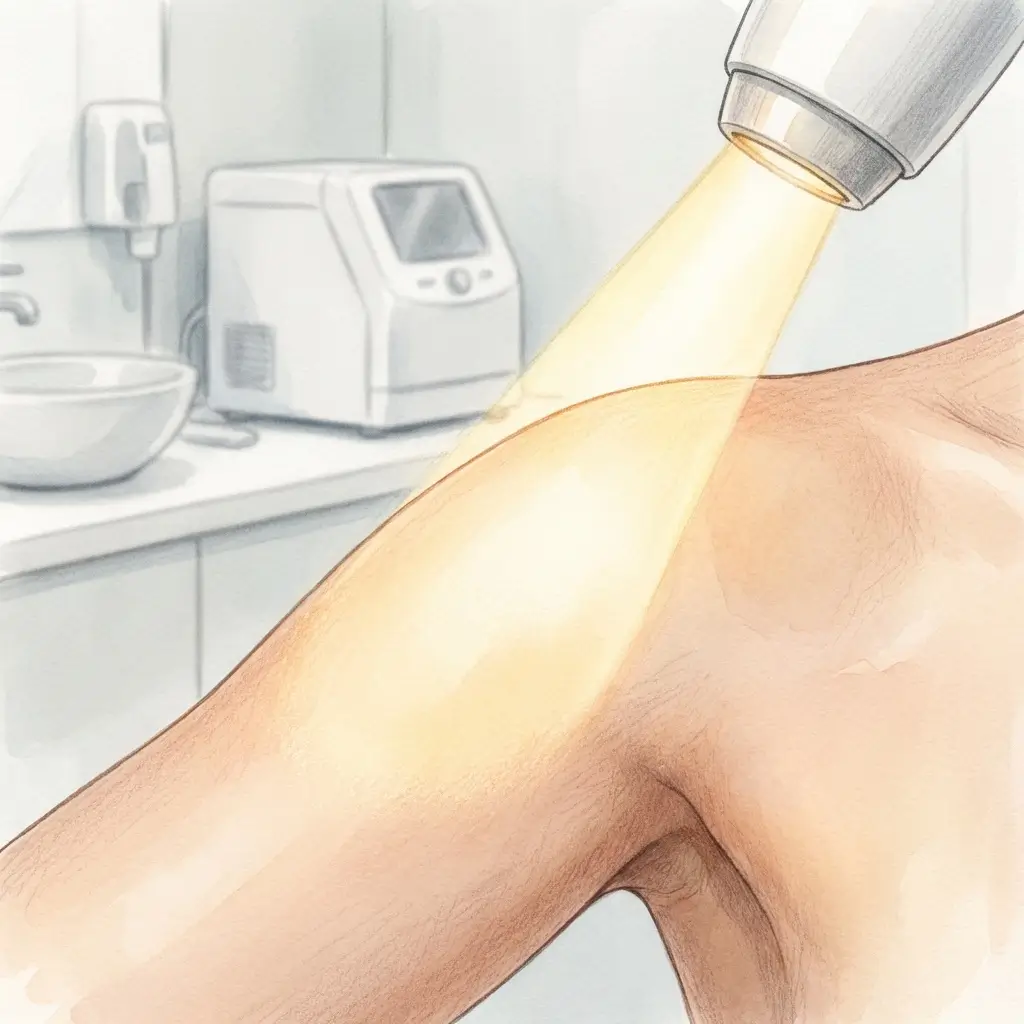
IPL is not technically a laser. It uses broad-spectrum light filtered to target melanin (and in some devices, haemoglobin). It's widely available, generally less expensive than laser treatment, and is commonly offered in both dermatology clinics and aesthetic spas.
For sun-induced pigmentation on lighter skin (Fitzpatrick I to III), IPL can be effective. It works by heating and fragmenting surface melanin, which then rises to the surface and flakes off over the following days.
For melasma and for darker skin tones, IPL is generally not recommended. The broad-spectrum light is less selective than a laser, which increases the risk of heating surrounding tissue and triggering post-inflammatory hyperpigmentation. This is one of the most common treatment backfires in pigmentation care: IPL initially seems to improve melasma, then the pigment returns darker or more widespread within weeks.
Typical cost: $200 to $600 per session. Typically performed in a series of 3 to 5 sessions.
Microneedling
Microneedling creates tiny controlled punctures in the skin using fine needles. The resulting wound-healing response stimulates collagen production and accelerates cell turnover. It can also be used as a delivery mechanism, allowing topical actives (like tranexamic acid or vitamin C) to penetrate deeper than they would on intact skin.
For hyperpigmentation, microneedling is generally considered lower risk than lasers or medium-depth peels. It doesn't target melanin directly, so it's less likely to trigger rebound pigmentation. The improvement comes from accelerated turnover and enhanced penetration of brightening actives.
Results tend to be more gradual than laser treatment. Most protocols involve 3 to 6 sessions spaced 4 to 6 weeks apart, with visible improvement building over the course of the series rather than appearing after a single session.
Needle depth matters. Shallow depths (0.5mm to 1.0mm) are lower risk and sufficient for product delivery and mild resurfacing. Deeper needling (1.5mm+) carries more downtime and more risk, particularly for pigment-prone skin.
Typical cost: $200 to $700 per session depending on the device and whether supporting serums are included.
Hydroquinone (Prescription Strength)
Hydroquinone isn't a procedure, but prescription-strength formulations (4% and above) are frequently prescribed alongside clinical treatments and represent a level of intervention beyond OTC products.
It remains the most studied and effective topical depigmenting agent available. It works by inhibiting tyrosinase, the enzyme responsible for melanin production. At prescription strength, it produces faster and more significant results than any OTC alternative.
The limitations are well documented. It should not be used indefinitely. Most dermatologists recommend cycling (4 to 5 months on, followed by a break) to avoid ochronosis, a paradoxical darkening that can occur with prolonged use. It also causes photosensitivity, making rigorous sun protection essential during use.
Prescription hydroquinone is often used as part of a combination approach (the modified Kligman's formula, which combines hydroquinone with a retinoid and a mild corticosteroid, is one of the most established protocols for melasma).
Before Booking Anything
A few things worth considering before committing to any clinical treatment for pigmentation:
- Know your pigment type. Whether the pigment is epidermal (surface) or dermal (deeper) affects which treatments are appropriate. A Wood's lamp examination or dermoscopy can help determine this. Treating dermal pigment with surface-level procedures is one of the most common sources of disappointing results.
- Know your skin tone's risk profile. Fitzpatrick IV to VI skin carries significantly higher risk of post-inflammatory hyperpigmentation from procedures that generate heat or inflammation. This doesn't mean procedures are off the table, but it does mean the choice of device, settings, and practitioner experience matter more.
- Ask about the practitioner's experience with your skin type. Many devices are calibrated for lighter skin by default. A practitioner who routinely treats diverse skin tones will adjust parameters accordingly. This is one of the most important questions to ask during a consultation.
- Have realistic expectations about melasma. Melasma is a chronic condition with a vascular component. Procedures can improve it, but they rarely resolve it permanently. Recurrence is common, and aggressive treatment often makes it worse. A conservative, layered approach typically produces better long-term outcomes than a single dramatic intervention.
- Ensure your foundation is in place first. Sun protection, barrier health, and trigger management should be established before any procedure. Without that foundation, clinical treatments are working against a background that undermines their results.

The Takeaway
Clinical treatments can do things that topical products can't. They can reach deeper pigment, produce faster visible results, and address conditions that have plateaued under conservative care. For the right person with the right type of pigmentation, they're worth considering seriously.
But they're not the starting point. They work best when layered on top of a solid foundation of protection, a well-chosen topical routine, and an understanding of what's actually driving the pigment. Without that context, even the best procedure is working against a system that will keep producing the problem it's trying to solve.
That system includes the internal environment your melanocytes operate in. Systemic inflammation, oxidative stress, hormonal inputs, and micronutrient availability all shape how reactive those melanocytes are before, during, and after a procedure. A clinical treatment performed on skin that is internally inflamed or nutritionally depleted is fighting conditions it cannot change with light, acid, or needles. The signalling-layer pages explain what drives melanocyte behaviour from below the epidermis, and internal support covers how to address it.


