


You went in for a laser session or a peel to treat your pigmentation, and now the area looks darker than it did before. Your stomach drops. But before you spiral, you need to know that some degree of post-procedure darkening is completely normal and expected. The real question is whether what you are seeing is the standard healing process or the beginning of rebound pigment that needs attention.
The normal darkening window
Most professional treatments that target pigment (lasers, IPL, chemical peels, microneedling) cause a controlled injury to the skin. That injury triggers inflammation, and inflammation triggers melanocyte activity. That is the same pathway that causes hyperpigmentation in the first place, which is why it feels counterintuitive. But in a well-executed procedure at appropriate settings, that initial darkening is temporary and part of the resolution process.
Days 1 to 7: The treated area may look darker, crusted, or discoloured. After laser, you might see micro-crusting or a coffee-ground texture on the spots that were targeted. After peels, you may see uniform darkening followed by controlled flaking. This is expected. The pigmented cells are being pushed to the surface and shed.
Weeks 1 to 3: The crusting or flaking resolves. The skin underneath often looks pink, fresh, and lighter than the surrounding area. This is not your final result. The skin is still healing and pigment production is still settling.
Weeks 3 to 6: The treated area should be settling toward its new baseline. Spots treated with laser often look significantly lighter by this point. Peel results continue to develop. If the area looks better than it did before the procedure, you are on the right track.
When darkening is not normal
Post-procedure darkening crosses from "expected healing" to "potential problem" when it persists beyond the normal window or when new pigment appears in areas that were not originally affected.
Post-inflammatory hyperpigmentation (PIH) from the procedure: This is the most common complication. The controlled injury triggered a pigment response that exceeded what normal healing resolves. PIH from procedures typically appears two to six weeks after treatment and presents as a diffuse darkening over the treated area, not the discrete spots you were treating.
Rebound pigment: Particularly relevant for melasma. The procedure may have initially improved the pigment but triggered a rebound flare that leaves the area as dark or darker than before. This is why aggressive laser treatment on melasma-prone skin is controversial among dermatologists.
Risk factors for post-procedure pigment:
- Melanin-rich skin: higher baseline melanocyte reactivity means the inflammatory response from the procedure is more likely to trigger excess pigment production
- Aggressive settings: higher energy, deeper penetration, and more passes increase the inflammatory stimulus
- Inadequate sun protection after treatment: the healing skin is hypersensitive to UV, and unprotected exposure can trigger pigment production in the recovery window
- Procedure performed on actively inflamed skin or over damaged barrier
How skin tone affects post-procedure timelines
This is not a footnote. It is central to understanding post-procedure pigment risk.
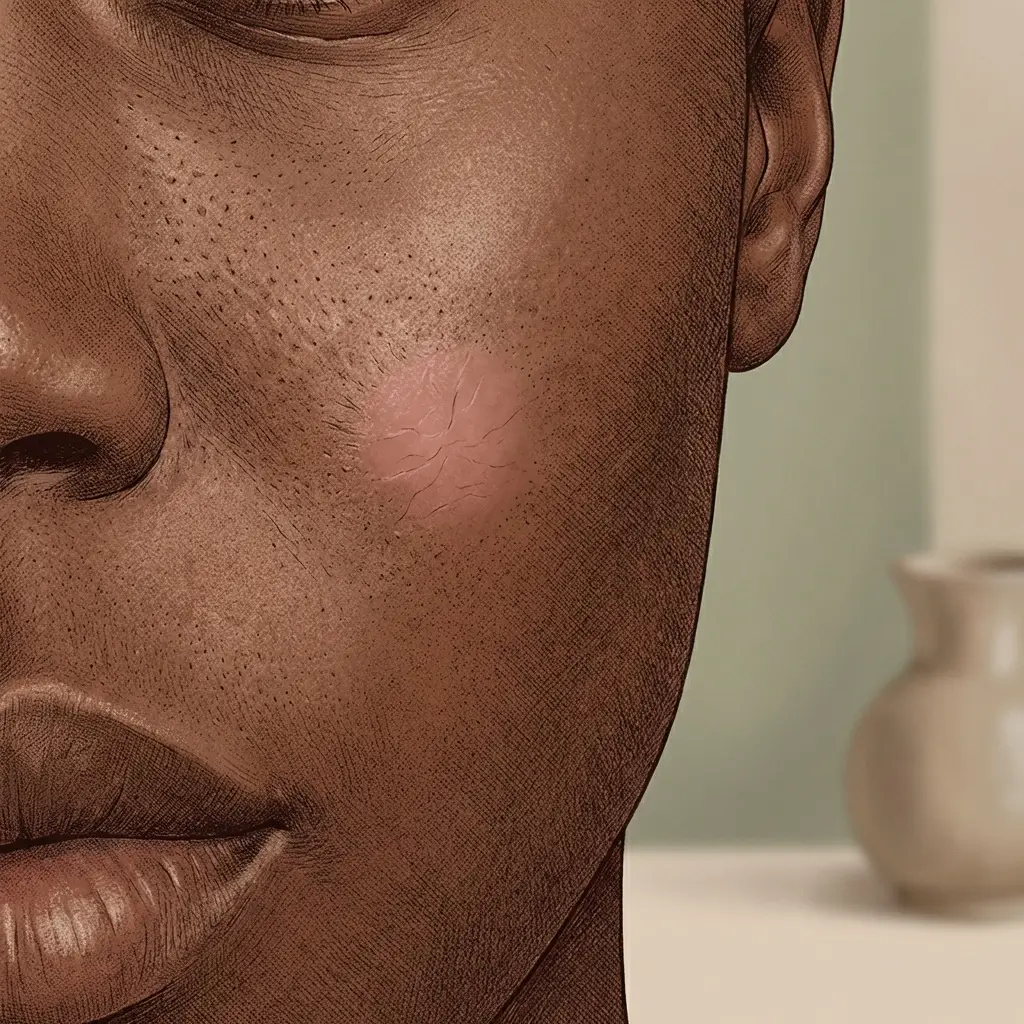
Melanin-rich skin has more active melanocytes, which means the inflammatory response from any procedure carries a higher risk of triggering excess pigment production. The same laser settings that produce clean results on lighter skin can cause significant PIH on darker skin. This does not mean procedures are off the table for deeper skin tones. It means the settings need to be more conservative, the provider needs to be experienced with melanin-rich skin, and the post-care protocol needs to be rigorous.
If you have a deeper skin tone and are considering a procedure for pigmentation, the single most important thing you can do is find a provider who regularly treats patients with your skin tone and ask about their approach to managing post-procedure pigment risk.
Realistic timelines by procedure type
Laser (IPL, Q-switched Nd:YAG, fractional): Normal darkening and crusting resolves in one to two weeks. Final results visible at four to six weeks. If PIH develops, expect an additional three to six months of fading. Multiple sessions may be needed, spaced four to eight weeks apart.
Chemical peels (superficial to medium): Flaking and controlled shedding over three to seven days. Initial results visible at two to three weeks. Full results after a series (three to six sessions). PIH risk is lower than laser but still present, especially on reactive skin.
Microneedling: Redness and mild swelling for one to three days. Initial improvement visible at two to four weeks as collagen remodelling begins. Pigment results are more gradual than laser. PIH risk is lower at conservative needle depths.
When to contact your provider
Reach out if you see new darkening that appears two or more weeks after the procedure and is not resolving, if the treated area is getting progressively darker rather than lighter, if you develop pigment in areas that were not treated, or if you have any signs of infection (unusual swelling, warmth, discharge).
Post-procedure PIH is treatable, but the earlier it is identified, the more options you have. Do not wait months hoping it will self-resolve if the trajectory is clearly going in the wrong direction.
Post-procedure darkening is usually your skin doing exactly what it should. The difference between normal healing and a problem is timing, trajectory, and whether the darkness is resolving or building. Know the window, and you will know when to wait and when to act.


