


This one feels backwards, which is why it catches so many people off guard. You built a routine specifically to fade your pigment. You have actives, exfoliants, targeted serums. You are consistent. And the pigment is stalling or getting worse. The thing nobody told you is that the routine itself can become the source of the inflammation that keeps the pigment in place.
This is a different problem from an external trigger that has not been resolved. That is about something outside your routine still driving pigment. This is about your routine creating the problem from the inside of your skincare approach.
The paradox
Most actives that target pigment work by accelerating cell turnover, inhibiting melanin production, or both. AHAs, retinoids, vitamin C, azelaic acid: individually, each of these is well supported for pigment management. But they all place some degree of stress on the skin barrier. Used at the right intensity and frequency, the barrier can handle it and recover between applications.
Used too aggressively, too frequently, or layered together, they strip the barrier faster than it can rebuild. Once the barrier is compromised, two things happen simultaneously that make pigment worse.
First, your skin enters a low-grade inflammatory state. A damaged barrier leaks moisture and lets irritants in, and the skin responds with chronic, low-level inflammation. That inflammation is the same type of signalling that tells melanocytes to produce pigment. You are now generating melanocyte activation from your routine while simultaneously trying to suppress it with your routine.
Second, your topicals stop working properly. An intact barrier allows controlled, consistent absorption. A damaged barrier either lets too much through (causing irritation spikes) or fails to deliver ingredients evenly. The products are the same. The delivery surface is not.
The result is the paradox: more effort, slower fading.
How to tell if this is your problem
The signs are consistent and distinct from other stall factors.
Your skin feels tight after cleansing, even with a gentle cleanser. Products that used to feel fine now sting or burn on application. You have a persistent low-grade redness that does not correlate with breakouts or specific irritation events. Your skin texture looks rough, shiny, or papery in a dehydrated way. You are more sensitive to temperature, wind, or fragrance than you were before you started the routine.
The key differentiator from an active external trigger is timing and pattern. Barrier damage from over-treatment tends to develop gradually over weeks of routine use. It affects the areas where you are applying the most actives. And it often coincides with a period where you increased frequency, added a new active, or layered multiple strong ingredients.
If your skin was tolerating the routine fine for months and then a pigment stall coincided with adding a stronger retinoid or an extra exfoliant, the barrier is the most likely culprit.
Why repair accelerates fading
When the barrier is repaired, the chronic inflammation it was generating subsides. Melanocytes stop receiving the constant low-level activation signal. At the same time, the intact barrier restores consistent, controlled absorption for the topicals you reintroduce. Less inflammation and better product performance at the same time. The fading that stalled often resumes within weeks of pulling back.
This is why the advice feels counterintuitive but works. The fastest path to faster fading is sometimes to stop trying to fade the pigment and let the barrier recover first.
What recovery looks like
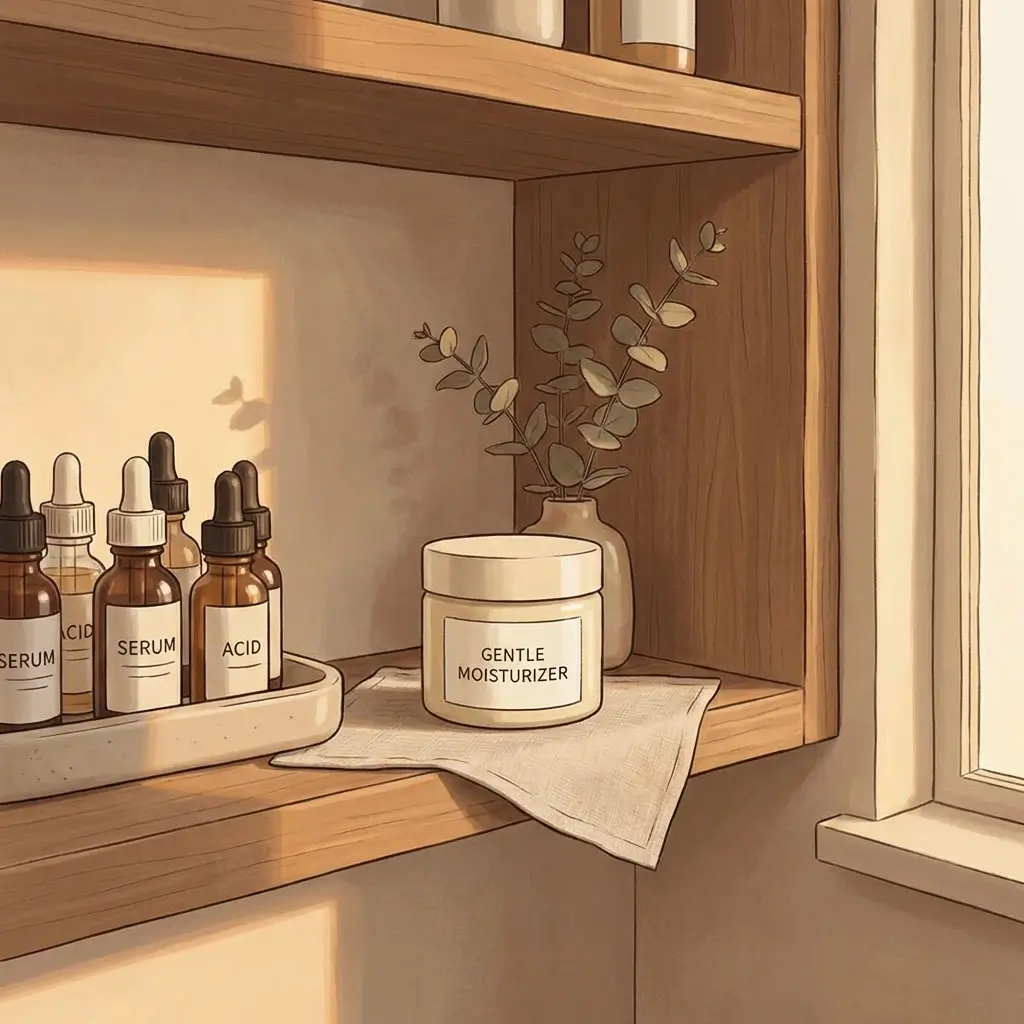
Strip back to basics for two to four weeks. A gentle cleanser that does not leave skin feeling tight. A simple moisturiser with ceramides or squalane. Sunscreen. No actives, no exfoliants, no targeted serums. The skin needs to rebuild its lipid layer without new stress being added on top.
The discomfort of doing nothing about your pigment for a few weeks is real. But your skin cannot fade pigment efficiently while it is diverting all its resources to barrier repair.
When you reintroduce actives, go one at a time. Lower concentration than before. Fewer days per week. Build up gradually and watch for early signs of barrier stress before increasing. The sustainable intensity almost always produces better results over three to six months than the aggressive intensity that burns out the barrier in six weeks.
The broader principle
Pigment treatment is not a tolerance contest. The instinct to treat harder, layer more, and push through irritation is understandable, but skin that is inflamed from over-treatment is skin that is actively producing the pigment you are trying to eliminate. Matching your routine's intensity to your barrier's capacity is not a compromise. It is the approach that works.
If more products are not producing more results, the answer is probably not another product. Sometimes the fastest way forward is giving your skin less to fight and more room to recover.


