


If you've ever watched a breakout heal only to leave a dark mark that lasts longer than the breakout itself, you already know how post-inflammatory hyperpigmentation works. The spot clears. The mark stays. And sometimes the mark bothers you more than the original problem did.
Post-inflammatory hyperpigmentation (PIH) forms when inflammation in the skin triggers melanocytes to overproduce pigment. The stronger the inflammation and the longer it lasts, the more pigment gets deposited. This applies to acne, eczema flares, insect bites, cuts, burns, and any other event that creates a reaction in the skin.
The good news is that PIH isn't a given. What you do during and immediately after a flare can meaningfully reduce the chance of a lasting mark. The window is short, and the impact is real.
Why some flares leave marks and others don't
Not every breakout leaves a dark spot. Not every eczema flare leaves discolouration. The difference comes down to three things:
Intensity of the inflammation. A deep, painful cystic breakout creates more inflammation than a small surface-level blemish. A severe eczema flare creates more inflammation than mild dryness. The stronger the reaction, the louder the signal to your melanocytes.
Duration of the inflammation. A breakout that resolves in three days sends a shorter signal than one that lingers for two weeks. An insect bite that's left alone heals faster than one that's scratched repeatedly. The longer the inflammation persists, the more pigment accumulates.
Your skin's baseline reactivity. People with melanin-rich skin have melanocytes that respond more aggressively to inflammation. The same breakout that leaves no mark on lighter skin can leave a visible dark spot on darker skin. This isn't something you can change. It's something you can account for by managing inflammation more aggressively when it happens.
These three factors explain why PIH feels so unpredictable. It's not random. It tracks directly with how much irritation your skin went through and how reactive your skin naturally is.
What to do during an active breakout
The priority during an active breakout is to calm the inflammation as quickly as possible. Every day the inflammation stays active is another day your melanocytes are being stimulated.
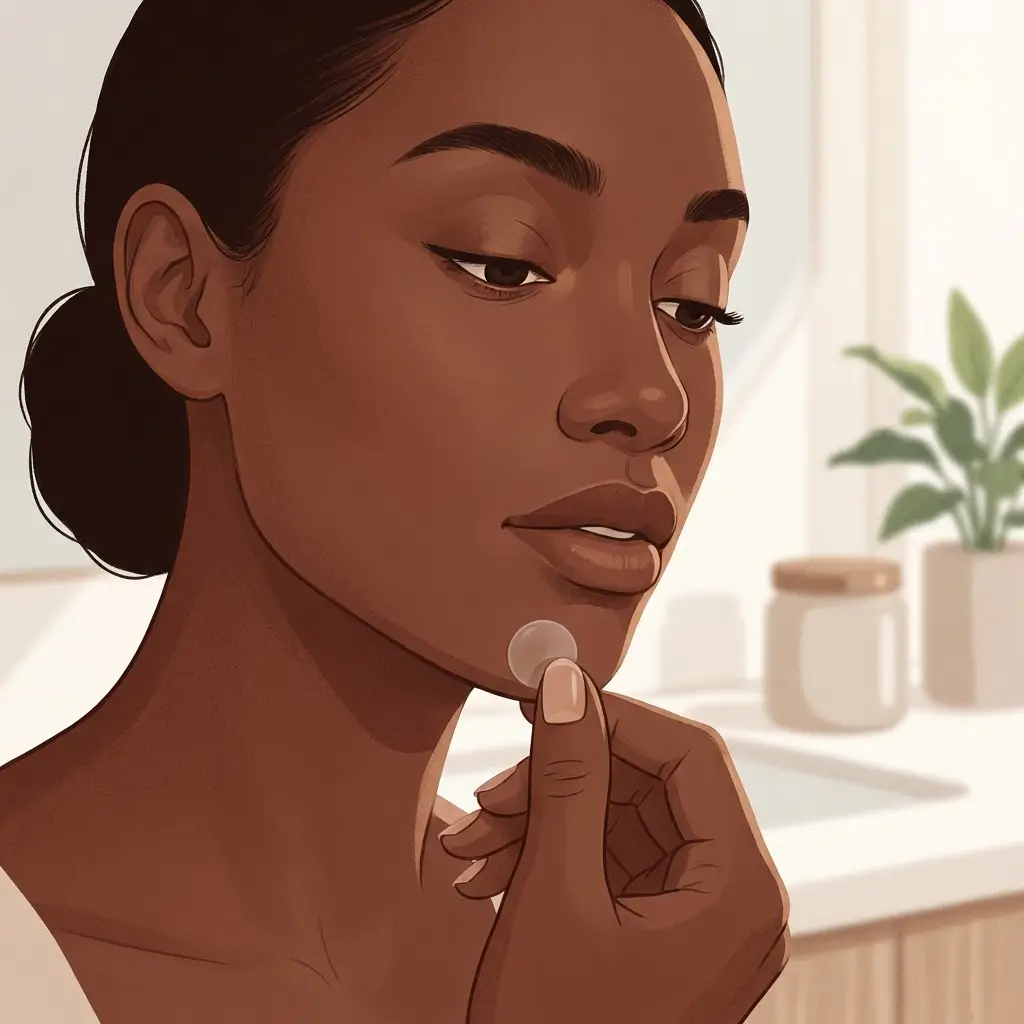
- Don't pick, squeeze, or extract. This is the single most impactful thing you can do. Picking extends the inflammation, introduces bacteria, damages tissue, and dramatically increases the chance of a lasting mark. If you're prone to picking, put a hydrocolloid patch over the spot. It protects the area, absorbs fluid, and removes the temptation.
- Use targeted anti-inflammatory treatment. A benzoyl peroxide spot treatment, a sulfur-based treatment, or an anti-inflammatory like azelaic acid can help resolve breakouts faster. The goal is resolution speed, not aggressive drying.
- Don't over-dry. Aggressive drying products (high-concentration benzoyl peroxide, alcohol-based toners, physical scrubs on active breakouts) create additional irritation that adds to the problem. More irritation means more pigment risk.
- Protect the area from UV. Inflamed skin is more photosensitive. UV exposure on an active breakout amplifies the pigment response. Daily sun protection over the affected area, even if you're mostly indoors, is especially important while the skin is inflamed.
What to do during eczema, bites, and skin injuries
The same principle applies to non-acne inflammation: reduce it quickly and protect the area while it heals.
- Eczema flares. Follow your prescribed treatment plan to get the flare under control as fast as possible. If you don't have a plan, a bland emollient to protect the area and an over-the-counter hydrocortisone for short-term use can help bridge the gap until you see a doctor. Don't scratch. Scratching extends the flare and adds physical disruption on top of the inflammation already happening.
- Insect bites. Anti-itch treatment (antihistamine, hydrocortisone) to prevent scratching. A bite that's left alone heals with minimal pigment. A bite that's scratched for days creates a much larger zone of inflammation and a much larger dark mark.
- Minor cuts and burns. Keep the area clean, moist, and protected. Moist wound healing (with an occlusive like petroleum jelly and a bandage) produces less inflammation and less pigment than leaving a wound exposed to air. Protect from sun while healing.
The common thread across all of these is speed and restraint. Calm the inflammation fast. Don't add to it. Protect while it heals.
What to do in the days after inflammation resolves
The flare is over. The pigment risk isn't gone yet. The weeks immediately after resolution are when the mark either sets in or fades before it fully develops.
- Keep the area moisturised. A strong, well-maintained barrier supports faster recovery and reduces the chance of residual low-grade irritation continuing to signal pigment production.
- Continue strict sun protection on the area. Newly healed skin is more photosensitive for weeks after inflammation resolves. UV exposure during this window can darken a mark that might otherwise have stayed faint. This is especially important on the face, where ongoing UV exposure is highest.
- Don't start aggressive treatment on the mark immediately. Resist the urge to apply strong brightening actives to a fresh post-inflammatory mark. The skin underneath is still recovering. Aggressive treatment on fragile skin can trigger a second round of irritation and make the mark worse. Wait until the skin feels fully healed (no tenderness, no texture change, no sensitivity) before introducing any active treatment.
- Be patient with timing. Superficial PIH (sitting in the upper layers of skin) often fades significantly on its own over weeks to months, especially with good sun protection. Deeper PIH (grey-blue tones rather than brown) takes longer and may benefit from treatment. Even then, treatment works better on a healed, stable base.
- Support recovery from the inside. Your skin's ability to recover from inflammation and regulate pigment production isn't just about what you put on it. Internal factors like antioxidant status and inflammation levels affect how much pigment gets deposited in the first place and how efficiently marks fade once the flare is over.
Why skin tone affects PIH risk
PIH is possible on any skin tone. It's significantly more common and more visible on melanin-rich skin. People with medium to deep skin tones develop PIH more frequently, with darker marks that last longer, after the same flares that leave little to no mark on lighter skin.
This isn't a flaw. It's how melanin-rich skin is wired. The melanocytes are more responsive to inflammation, which means they produce pigment faster and in greater quantities when triggered. It also means that prevention (calming inflammation quickly, avoiding picking, protecting from UV during healing) has a bigger payoff. Every day you shorten a flare is a day less pigment your melanocytes produce.
If you're dealing with repeated PIH from recurring breakouts or chronic eczema, the approach shifts from managing individual marks to reducing the pattern that keeps producing them.


