


This is one of the most frustrating patterns in hyperpigmentation: you start treating it, you follow the advice, you're consistent with your routine, and your skin gets worse.
Not "purging." Not a temporary adjustment phase. Actually worse. New marks appearing in areas that were clear. Existing marks darkening instead of fading. Skin that feels raw, sensitive, and reactive in a way it didn't before you started.
If this sounds familiar, your routine may be creating the inflammation it was meant to resolve. This kind of rebound is far more common than most skincare advice acknowledges, especially on melanin-rich skin where it takes less irritation to trigger a pigment response.
How treatment becomes the trigger
Every active ingredient in a brightening routine works by creating a controlled amount of stress in the skin. Retinoids accelerate cell turnover. AHAs dissolve the bonds between dead cells. Vitamin C triggers protective responses through mild oxidative stress. Brightening agents like hydroquinone or arbutin interfere with how pigment is produced.
In moderation, this stress is productive. It pushes the skin to renew faster, shed pigmented cells, and slow new pigment production. But when the stress exceeds what the skin barrier can handle, the skin stops treating it as helpful and starts treating it as damage. The response is inflammation. And inflammation is the exact signal that tells melanocytes to produce more pigment.
The result is a cycle that feeds itself. You treat the pigment, but the treatment weakens the barrier. The weakened barrier lets inflammation build. The inflammation activates your melanocytes. New pigment forms. So you treat harder, the barrier weakens further, and the whole thing accelerates.
What over-treatment looks like
The signs are often gradual enough that people push through them rather than recognising the pattern.
- Stinging or burning when applying products that used to feel fine. This means the barrier has thinned to the point where ingredients are penetrating too deeply.
- Tightness and dryness that moisturiser doesn't fully resolve. The barrier isn't holding moisture anymore.
- New breakouts in unusual areas. A compromised barrier lets in bacteria and irritants that wouldn't normally reach the skin.
- Visible redness or a "raw" look. The skin is chronically inflamed, even if it doesn't feel painful.
- Pigment darkening or new marks appearing. This is the rebound. The treatment is now generating more pigment than it's removing.
You might interpret these signs as needing a stronger routine or more time. The instinct to push harder is understandable but counterproductive. Your skin is telling you it's overwhelmed. More product makes it worse, not better.
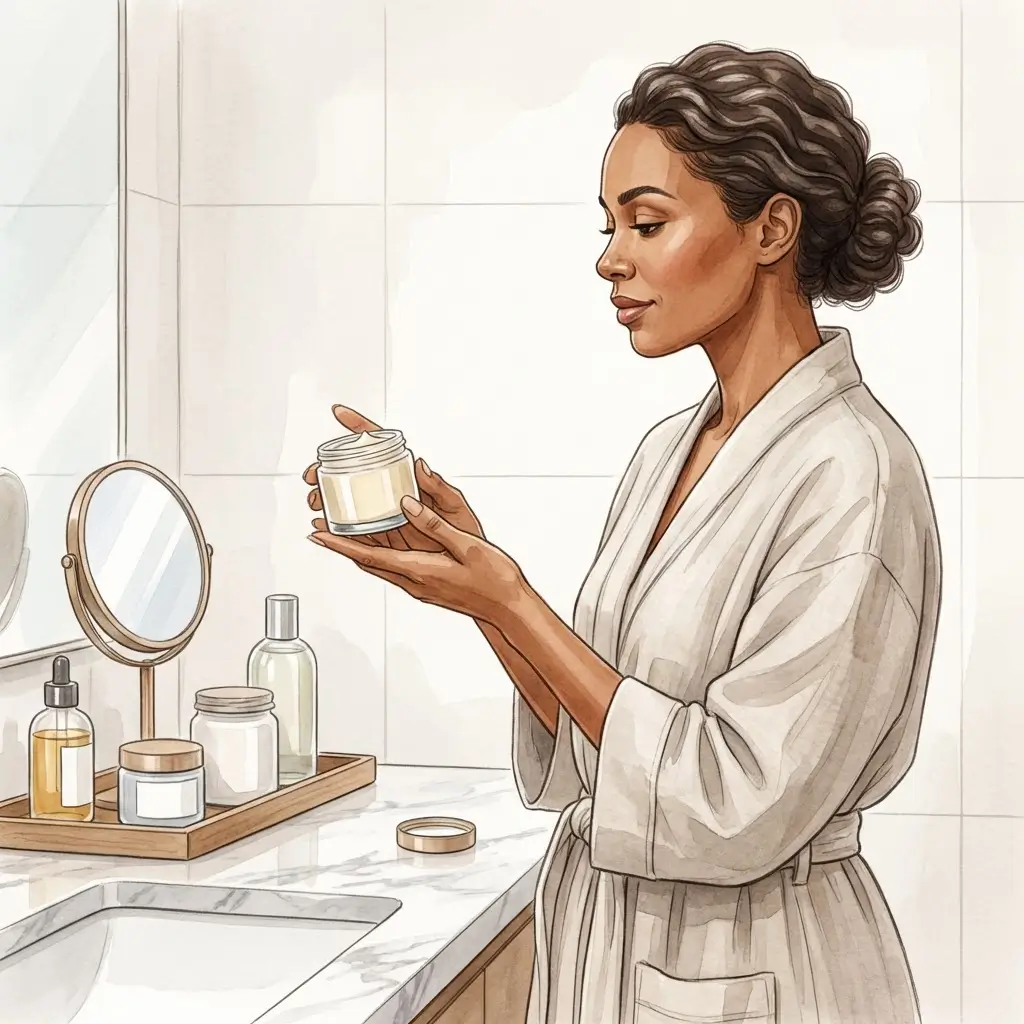
The most common over-treatment patterns
- Too many actives at once. A retinoid, an AHA, a vitamin C serum, and a brightening treatment layered in the same routine. Each one is mild on its own. Together, they exceed the barrier's tolerance. This is the most common pattern if you've built your routine from multiple sources of advice without considering how the products interact.
- Exfoliating too frequently. Daily AHA or BHA use when two to three times per week would be sufficient. The skin needs recovery days between exfoliation sessions to rebuild what was stripped.
- Retinoid strength escalation. Starting at a concentration that's too high, or moving to a stronger formulation before the skin has adapted to the current one. Retinoid adaptation takes weeks, not days. Jumping ahead creates the irritation window where rebound is most likely.
- Adding new products during a reaction. Skin starts reacting to the routine, and instead of simplifying, you add a calming serum, a new moisturiser, and a barrier repair product on top of everything else. More products on compromised skin means more potential irritants, even if the new products are gentle.
- Using professional-grade products without professional guidance. High-concentration peels, prescription retinoids, or clinical brightening agents used at home without a clear protocol for introduction, frequency, and barrier monitoring.
How to recover
Recovery follows a predictable sequence, but it requires doing less, which is psychologically difficult when you're watching pigment worsen.
- Stop all actives. Retinoids, acids, vitamin C, brightening serums, exfoliants. All of them. Temporarily.
- Simplify to three products. Gentle cleanser, moisturiser with barrier-supporting ingredients (ceramides, fatty acids), and sunscreen. Nothing else.
- Give it two to four weeks. The barrier needs time to rebuild. You won't see fading during this period. That's expected. You should see the irritation resolve, the stinging stop, and the skin start to feel calm and resilient again.
- Support the recovery from the inside. This is the part of recovery you can actively control while your actives are paused. Anti-inflammatory nutrients and antioxidants help calm the irritation that's driving the rebound, and your barrier rebuilds using ceramides and fatty acids that are produced internally. If your internal environment is stable, the barrier recovers faster. If it isn't, you're relying on moisturiser alone to do a job that starts underneath the surface.
- Reintroduce one active at a time. Start with the gentlest option at the lowest concentration. Use it two to three times per week, not daily. Wait two weeks before adding anything else.
- Watch for the signs. If stinging, tightness, or dryness return, you've moved too fast. Pull back again. The barrier sets the pace, not the calendar.
This process feels slow. It's still faster than continuing to damage the barrier and watching new pigment form while you try to treat it. If you repair your barrier first, you'll see faster net progress than if you push through the irritation.
Preventing it from happening again
The risk doesn't go away once you've recovered. The same pattern can repeat if you re-escalate too quickly.
A few principles that keep the routine productive without tipping into rebound:
- Limit your routine to two actives maximum at any given time
- Alternate actives on different nights rather than layering them in the same session
- Build in recovery nights with no actives, just cleanser, moisturiser, and nothing else
- Treat barrier health as a non-negotiable baseline, not a step you skip when things are going well
- If your skin starts stinging, the routine has already gone too far. Pull back immediately rather than waiting to see if it resolves
If you're considering professional procedures alongside your topical routine, see How to Protect Your Skin After a Laser, Peel, or Microneedling Procedure for how to manage the additional stress without overwhelming the skin.


