


Yes. And for women with melasma in particular, heat may be the single most underestimated trigger behind pigment that keeps returning despite good sun protection.
Most prevention advice focuses on UV. Some of the better advice includes visible light. But heat operates through its own pathway, one that doesn't require any light exposure at all. You can be indoors, fully covered, wearing tinted sunscreen with iron oxides, and still experience a pigment flare because the temperature around your skin got too high.
If your hyperpigmentation worsens in summer even though your sunscreen routine hasn't changed, or if you notice flares after cooking over a hot stove, exercising in high heat, or taking hot showers, this is likely the mechanism at work.
How heat triggers pigment production
Heat increases blood flow to the skin. That's a normal thermoregulatory response. But increased blood flow also delivers more inflammatory signals to the area, and in skin that's already primed for pigmentation, that's enough to tell melanocytes to ramp up production.
It works through a few overlapping pathways. Heat triggers inflammatory cells in the skin to release histamine and other signals that promote blood vessel activity and keep the area flushed. It also amplifies the effect of other triggers: UV exposure in hot conditions produces a stronger pigment response than the same UV exposure in cool conditions. The heat doesn't just add to the problem. It multiplies it.
This is why melasma has such a strong seasonal pattern. It's not just that summer means more sun. Summer means more heat, and the heat itself is a trigger that compounds everything else.
The temperature threshold isn't extreme. Skin surface temperatures above roughly 40°C (104°F) are enough to activate these pathways. That's well within the range of a hot shower, a steam room, a kitchen stove, direct engine heat from a car dashboard, or even prolonged sun exposure on a still day. You don't need to be in a sauna to hit it.
Why melasma is especially reactive to heat
All types of hyperpigmentation can be influenced by heat, but melasma responds more dramatically than most. This is because melasma doesn't just involve excess melanin. The affected areas also have more blood vessels and more inflammatory cells than the surrounding skin, which makes them structurally more responsive to anything that increases blood flow.
When a person with melasma walks into a hot kitchen or finishes a high-intensity workout, the blood vessels in the affected areas dilate more than the surrounding skin. More blood flow means more inflammatory signalling, which means more stimulation to melanocytes that are already overactive. The result is a visible darkening that can happen within hours.
This is one of the reasons melasma feels so unpredictable. A person can follow an identical routine in January and July and see dramatically different results. The routine didn't change. The temperature did, and that was enough to shift the balance.
If you're dealing with melasma that flares in summer or worsens after heat exposure, the melasma prevention checklist covers the full layered strategy, including heat management.
Common heat sources most women don't think about
UV-related heat is the obvious one. But many of the heat exposures that trigger pigment happen indoors or in contexts that don't feel like "sun exposure" at all.
Cooking. Standing over a hot stove, oven, or grill brings radiant heat directly to the face. Women who cook daily often get more cumulative facial heat exposure from their kitchen than from outdoor sun. If your melasma is worse on one side of your face, consider which side faces the stovetop.
Hot showers and steam. Hot water on the face raises skin surface temperature quickly. Steam rooms and saunas are more intense versions of the same mechanism. If you're treating active hyperpigmentation, lukewarm water on the face is a safer default than hot.
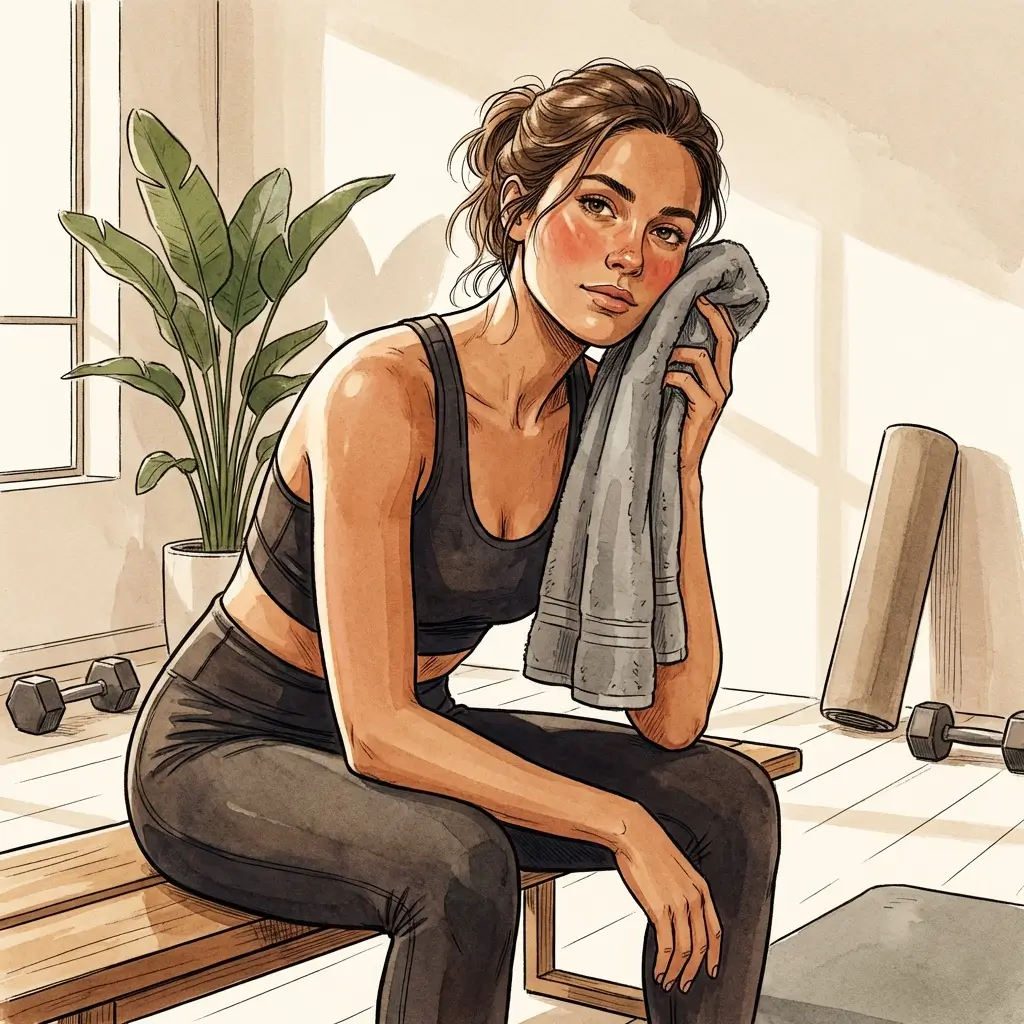
Exercise. Intense exercise raises core body temperature and sends blood rushing to the skin's surface. Outdoor exercise in hot weather compounds the effect with ambient heat and UV. This doesn't mean you shouldn't exercise. It means cooling down matters, and the timing of when you cool the skin after a session can influence whether that flush triggers a pigment response.
Car interiors. A parked car in summer can reach interior temperatures well above 40°C. Side windows let in visible light and heat even if the windshield has UV protection. Women who commute in hot climates are getting cumulative heat exposure that they might not associate with their pigment patterns.
Hot climates generally. Living in a warm climate means baseline heat exposure is higher year-round. This is one reason hyperpigmentation prevalence and relapse rates are higher in tropical and subtropical regions. It's not just the sun. It's the ambient temperature.
What actually helps
Heat management isn't about avoiding warmth entirely. It's about reducing the intensity and duration of heat exposure on the skin, especially on areas prone to pigmentation.
Cool the skin after heat exposure. If you've been cooking, exercising, or in a hot environment, bringing skin temperature down quickly interrupts the inflammatory response before it triggers melanocyte activity. A cool (not ice-cold) damp cloth on the face for a few minutes after heat exposure is one of the simplest interventions that actually makes a difference.
Use lukewarm water on your face. Hot showers feel good, but directing hot water at your face is one of the most controllable heat triggers you can eliminate. Let the shower be hot on your body if you like. Keep the water on your face cool or lukewarm.
Time outdoor exercise for cooler hours. Early morning or evening sessions reduce the combined load of UV, visible light, and heat. If midday exercise is unavoidable, prioritise cooling down quickly afterward and getting out of direct heat as soon as you're done.
Manage indoor heat sources. Use an exhaust fan or step back periodically when cooking. In hot climates, air conditioning isn't just comfort. It's reducing a pigment trigger. If you work near heat-generating equipment, awareness is the first step.
Don't rely on sunscreen for heat protection. This is the key distinction. Sunscreen blocks UV and, if tinted, visible light, but it doesn't lower skin temperature. Heat management is behavioural, not product-based. No cream, serum, or SPF will insulate your skin from thermal energy.
How heat fits into the bigger picture
Heat rarely acts alone. It compounds other triggers. UV exposure in hot conditions is worse than the same UV in cool conditions. A weakened barrier makes skin more reactive to heat. Internal instability from stress or hormonal shifts lowers the threshold at which heat triggers a response.
This is why heat management isn't a standalone solution. It's one layer in a prevention strategy that also includes UV and visible light protection, barrier care, and internal stability. But for women whose pigment has a clear seasonal pattern, or who notice flares after cooking, exercise, or hot environments, it's often the layer that was missing.
If your pigment gets worse every summer and you've already been diligent about sunscreen, heat is probably the variable worth addressing next.


