


Most women dealing with hyperpigmentation know they should wear sunscreen. The problem isn't awareness. It's that the advice usually stops at "apply SPF 30 or higher every morning" and leaves everything else to guesswork. How much is enough? When do you reapply? What about days you're mostly inside? What about the parts of your routine that sunscreen can't cover?
A daily sun protection strategy isn't just a product step. It's a set of small decisions you make throughout the day based on what your skin is actually facing. Once the logic makes sense, it stops feeling like a chore and starts running on autopilot.
Choosing the right sunscreen
Not all sunscreens protect equally against the triggers that drive hyperpigmentation. The label matters less than what's actually in the formula and how it performs on your skin.
- Broad-spectrum is non-negotiable. SPF alone measures UVB protection. Broad-spectrum means it also covers UVA, the wavelength that penetrates deeper and triggers melanocyte activity below the surface. Any sunscreen you use daily should say "broad-spectrum" on the label.
- SPF 30 is the minimum. SPF 50 is better for pigment-prone skin. The difference between SPF 30 and 50 isn't dramatic in percentage terms (roughly 97% vs 98% UVB filtration), but the margin matters when you're applying imperfectly, sweating, or rubbing product off through the day. SPF 50 gives you a slightly larger buffer for real-world conditions.
- Tinted sunscreens with iron oxides add a layer that clear formulas miss. Iron oxides block visible light, which triggers pigment through a separate pathway that conventional SPF doesn't cover. For women with melanin-rich skin, this is one of the most important upgrades you can make to your sunscreen choice. The tint needs to come from iron oxides (check the ingredients), not just cosmetic colour.
- Texture matters for consistency. The best sunscreen is the one you'll actually wear every day. If a formula feels heavy, pills under makeup, or leaves a visible cast on your skin tone, you'll skip it. A sunscreen that scores slightly lower on paper but goes on well enough that you wear it without thinking is worth more than a perfect formula sitting in your drawer.
How much to apply
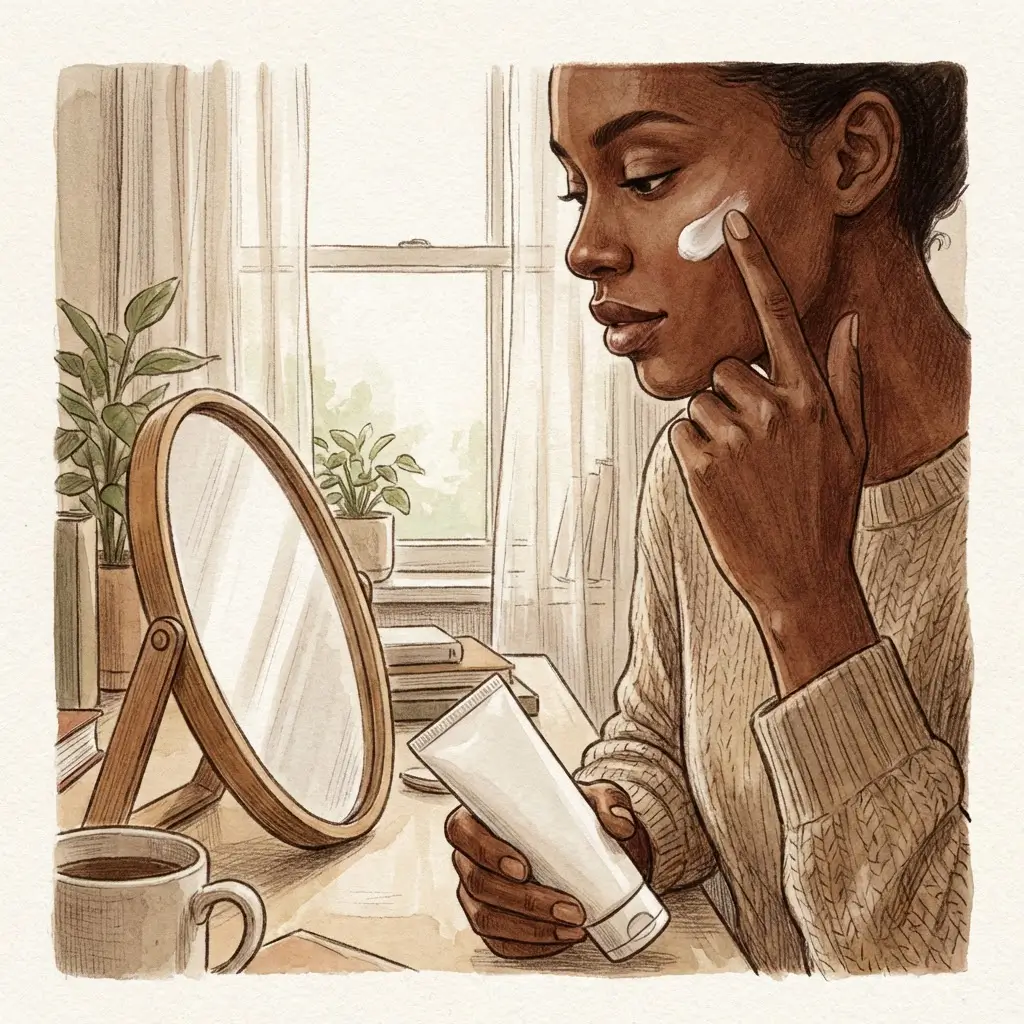
Most women underapply sunscreen by about half. The standard recommendation is roughly a quarter teaspoon for the face alone, which is more than most people expect. If you're using a pump bottle, that's usually two to three full pumps.
Underapplication doesn't just reduce protection proportionally. It reduces it exponentially. Half the recommended amount of SPF 50 doesn't give you SPF 25. It gives you something closer to SPF 7. This is one of the most common reasons women feel like their sunscreen "isn't working" when the formula itself is fine.
If a quarter teaspoon feels too heavy in one layer, apply in two thinner layers. First layer, let it set for a minute, then a second pass over the areas most prone to pigmentation (cheeks, forehead, upper lip, nose bridge). This also helps catch spots you missed the first time.
When to reapply
The morning application is the easy one. Reapplication is where most routines break down, and it's where the biggest protection gaps tend to form.
- Every two hours of cumulative sun exposure. This is the general guideline, but "cumulative" is the key word. If you're indoors most of the day and step outside for a 20-minute lunch and a 15-minute walk, you haven't hit two hours of exposure. If you're at the beach or walking through a city for hours, reapplication becomes urgent.
- After sweating, swimming, or rubbing your face. Sweat doesn't just dilute the product. It moves it around. Towelling off removes it. Touching your face throughout the day gradually thins the layer. If you've been sweating or rubbing, reapply regardless of time.
- Midday top-up for high-risk days. If you know you'll be outdoors between 10am and 3pm, a midday reapplication is worth the effort even if you're wearing makeup. Powder sunscreens with SPF can work as a top-up layer without disrupting what's underneath, though they shouldn't be your primary protection.
- Indoor days with window exposure. If you sit near a window for most of the day, your morning application is doing more work than you think. UVA passes through glass. Visible light passes through glass. A single morning application may be sufficient if you're deep inside a building, but if your desk faces a window, a midday reapplication or repositioning away from the glass is worth considering.
Physical barriers
Sunscreen is a chemical or mineral filter on your skin. Physical barriers are objects between you and the light source. They're simpler, they don't degrade over time, and they cover gaps that sunscreen can't.
- Wide-brimmed hats. A hat with at least a 3-inch brim blocks UV and visible light from reaching your face, ears, and the back of your neck. Baseball caps protect the forehead but leave the cheeks, jawline, and ears exposed, which are common melasma areas. Wide brims are more effective.
- Sunglasses with UV protection. The skin around your eyes is thin and prone to pigmentation. Sunglasses reduce UV and visible light exposure to the under-eye area and temples. Larger frames or wraparound styles cover more.
- Clothing. Long sleeves, high necklines, and UPF-rated fabrics provide consistent protection that doesn't need reapplication. For body areas prone to hyperpigmentation, clothing is often more reliable than sunscreen because it doesn't rub off or thin out through the day.
- Shade. The simplest barrier of all. Choosing the shaded side of the street, sitting under an umbrella, or positioning yourself away from direct light through a window reduces your exposure without adding any product or gear.
These aren't alternatives to sunscreen. They work alongside it. On high-risk days (strong sun, long outdoor exposure, active melasma), layering sunscreen with physical barriers is what makes the difference between adequate and effective protection.
Window and indoor exposure
This is the piece most daily routines miss entirely. If you spend most of your day indoors but near windows, you're getting more exposure than you think.
Standard glass blocks most UVB but lets UVA through. It lets visible light through almost completely. If your desk, couch, or kitchen faces a window that gets direct or even indirect daylight, your skin is absorbing both.
A few adjustments that help without requiring you to rearrange your life: position yourself at least a few feet back from direct window light where possible. If you work from home and your desk faces a window, consider which direction the light comes from at different times of day. UV-filtering window film is an option for rooms where you spend hours daily, though it blocks UV and some visible light, not heat.
For women with melanin-rich skin, window exposure during a full workday is one of the reasons pigment can worsen even without going outside. It's also why sunscreen alone isn't enough as a daily strategy. The morning application handles part of it. Awareness of where the light is coming from handles the rest.
Building the daily habit
A protection strategy only works if it's sustainable. The goal isn't a perfect routine on paper. It's a realistic one you follow consistently.
- Morning. Apply broad-spectrum SPF 50, ideally tinted with iron oxides, as the last step of your skincare routine before makeup. Use enough. Let it set before applying anything over it.
- Through the day. Reapply if you'll be outdoors for extended periods, after sweating, or if you're near strong window light for hours. Use a powder SPF as a top-up if a full reapplication isn't practical.
- When you go out. Hat if you'll be in direct sun for more than a few minutes. Sunglasses. Shade where available. These take seconds and extend your protection meaningfully.
- Year-round. Don't scale your routine down to zero in winter. UVA is present year-round, and seasonal complacency is one of the most common reasons women lose ground they'd gained during cooler months.
This sounds like a lot written out, but in practice it's a morning application, a hat by the door, and occasional midday awareness. Once the habit is set, it doesn't take meaningful time or thought. It just becomes what you do.


