


You're doing everything right. The routine is good. The sunscreen is consistent. The actives are well-chosen and well-tolerated. But the fading has stalled, or it's happening so slowly that you can barely tell whether the products are doing anything.
Before you switch products or add another active, there's a question worth asking: does your body actually have the resources it needs to do the repair work your routine is asking of it? If you're working through whether something internal is blocking your pigment from fading, this is one of the most common culprits.
Nutrient deficiencies that slow hyperpigmentation fading covers the broad nutrient landscape. This goes deep on the two deficiency categories that affect pigment fading most directly and are most commonly overlooked: iron and the B vitamins, specifically B12, folate, and B6.
Iron: the deficiency that hides in plain sight
Iron deficiency is the most common nutritional deficiency in the world, and it hits women of reproductive age hardest. Heavy periods, pregnancy, restrictive diets, and gut absorption issues are all risk factors, and they overlap frequently. If you're tired in a way that rest doesn't fix and your pigment has been stubborn for months, there might be a connection you haven't been asked about.
For your skin, iron does two things that directly affect whether pigment fades or stalls.
It supports oxygen delivery to tissues. Iron is essential for haemoglobin, which carries oxygen in your blood. When iron is low, oxygen delivery to the skin is reduced. Your melanocytes and the keratinocytes responsible for clearing pigmented cells operate in a less oxygenated environment. Everything that requires energy (cell turnover, repair, immune regulation) runs more slowly.
It supports antioxidant defence. Iron is a cofactor in certain antioxidant enzyme systems. When it's depleted, your body's capacity to neutralise free radicals at the tissue level drops. The oxidative environment around your melanocytes worsens, and oxidative stress is an independent driver of melanin production.
The relationship between iron and pigment is more complex than simple deficiency. In some presentations, particularly in deeper skin tones, iron deficiency itself can trigger hyperpigmentation. The mechanisms aren't fully mapped, but impaired cellular repair and increased oxidative vulnerability are the most likely contributors.
Here's why iron deficiency hides so well: standard blood tests often check haemoglobin but not ferritin. Haemoglobin doesn't drop until iron stores are deeply depleted. Ferritin, which reflects your iron reserves, drops much earlier. You can be iron-depleted enough to affect skin repair while your haemoglobin looks completely normal.
A ferritin level that's technically "in range" but sitting at the low end (under 30 ng/mL) may already be affecting how your skin functions. The numbers look fine on paper. The skin is still starving.
B12: the one that directly causes hyperpigmentation
B12 deficiency has a documented ability to cause hyperpigmentation on its own, independent of any other factor. This is a clinical presentation that's well-recognised in medical literature, particularly in people with deeper skin tones. The pigmentation can appear on the hands, feet, face, and oral mucosa, and it's caused by disrupted melanin regulation when B12 is insufficient.
Beyond causing pigmentation directly, B12 is essential for DNA synthesis and cell division. Every cell your skin turns over requires B12 to replicate properly. When levels are low, turnover slows. Pigmented keratinocytes sit in the epidermis longer. The fading process loses momentum even when the topical routine is doing its job.
The risk factors for B12 deficiency are specific:
- Vegan or vegetarian diet. B12 is found almost exclusively in animal products. Without supplementation, plant-based diets will produce deficiency over time.
- Metformin use. Commonly prescribed for PCOS and type 2 diabetes, metformin is documented to reduce B12 absorption. If you're on metformin long-term, B12 monitoring is important.
- Long-term PPI or antacid use. Proton pump inhibitors and H2 blockers reduce stomach acid, which is required for B12 absorption.
- Age over 50. B12 absorption efficiency declines with age even in people with adequate dietary intake.
- Gut conditions affecting the ileum. Crohn's disease, celiac disease, and other conditions affecting the lower small intestine can impair B12 absorption at the site where it happens.
The tricky part is that B12 deficiency develops slowly and the early symptoms are vague: fatigue, brain fog, mood changes, tingling in the hands or feet. By the time it's severe enough to be obvious, it's been affecting cellular processes (including skin turnover) for a long time. This is one of the deficiencies we see most often in women whose pigment has quietly stalled without explanation.
Folate and B6: the supporting cast
Folate works alongside B12 in DNA synthesis and cell division. The two are so interconnected that a deficiency in either one produces similar effects on skin turnover: slower cell replication, slower clearance of pigmented cells, slower fading.
Folate deficiency risk is highest during pregnancy (when demand increases sharply), in women with limited vegetable intake, and in women taking certain medications that interfere with folate metabolism (methotrexate, some anti-epileptics).
B6 is less discussed than B12 or folate, but it plays a role in over 100 enzyme reactions in the body, including several that affect skin health. B6 is involved in amino acid metabolism (relevant for protein synthesis and glutathione production), immune regulation, and haemoglobin production. Deficiency is less common than iron or B12 deficiency but can occur with long-term use of certain medications (some contraceptives, isoniazid) and in women with very restricted diets.
The practical point for all three B vitamins is similar: when they're low, the infrastructure your skin needs for repair and turnover isn't fully functional. Your topical routine is asking the skin to do work it doesn't have the building materials for.
What to test and how to read the results
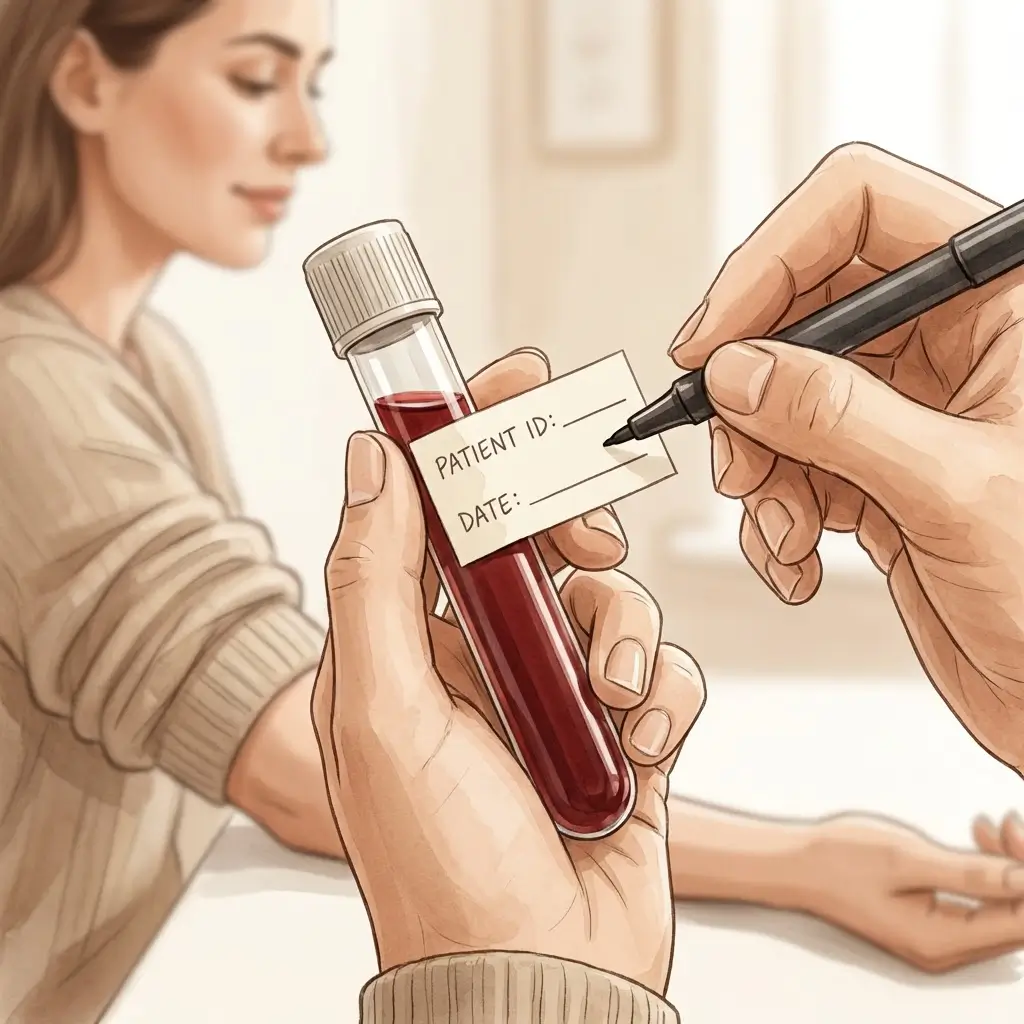
If you suspect these deficiencies might be slowing your progress, specific blood tests tell you more than guesswork:
- Ferritin for iron stores. Under 30 ng/mL is worth addressing even if it's technically in range. Full iron studies (serum iron, transferrin saturation, TIBC) give the complete picture.
- Serum B12. If the result is borderline (low-normal range) and your symptoms fit, ask for methylmalonic acid (MMA). MMA rises when B12 is too low for the body's needs, even when serum B12 looks acceptable.
- Serum folate to check folate levels directly.
- B6 is less commonly tested but can be requested if your risk factors or symptoms suggest it.
One critical point: don't supplement iron without testing first. Excess iron causes oxidative damage, which is the opposite of what your skin needs. Iron is one of the few nutrients where too much is genuinely harmful. Test, confirm the deficiency, then supplement at a dose your doctor recommends.
B12 and folate are safer to supplement without testing (excess is excreted rather than stored in a harmful way), but testing still gives you a clearer picture of what you're actually dealing with and whether the dose needs to be higher than a standard multivitamin provides.
While nutrient levels are being corrected, supplementation targeting the inflammatory and oxidative pathways can support the resolution processes that depend on those nutrients being present. The nutrient correction fills the foundation. The anti-inflammatory and antioxidant support builds on it.
Why correcting the deficiency changes the trajectory
When iron, B12, folate, or B6 levels are restored, the effects on skin are gradual but real. Cell turnover speed normalises. The skin's repair processes have the raw materials they need. Antioxidant defences are restored. The environment your melanocytes sit in becomes less oxidatively stressed and more capable of resolving existing pigment.
This doesn't produce overnight results. It produces a shift in the trajectory: fading that was stalled starts moving again. Products that seemed to have stopped working start producing visible progress. Not because the products changed, but because the system they depend on is now adequately resourced.
If you've been wondering whether your products are doing anything at all, the answer might not be about the products. It might be about what's underneath them.


