


You probably already know that a laser or a chemical peel can cause hyperpigmentation if things go wrong. Those feel like big events. Controlled medical procedures with obvious risks.
What gets far less attention is that your skin does not actually need a big event to start producing extra pigment. It needs inflammation. And inflammation can come from something as mundane as the elastic of your underwear, a razor dragged across the same patch of skin three times a week, or an insect bite you could not stop scratching.
The mechanism is the same one that drives post-procedure pigmentation. The scale is smaller. But when the triggers are repeated, the results can be just as visible and just as persistent.
Your skin reads physical stress as damage
When something rubs, scrapes, punctures, or burns your skin, your body does not distinguish between "minor inconvenience" and "actual threat." It launches the same inflammatory repair sequence either way, just at different intensities.
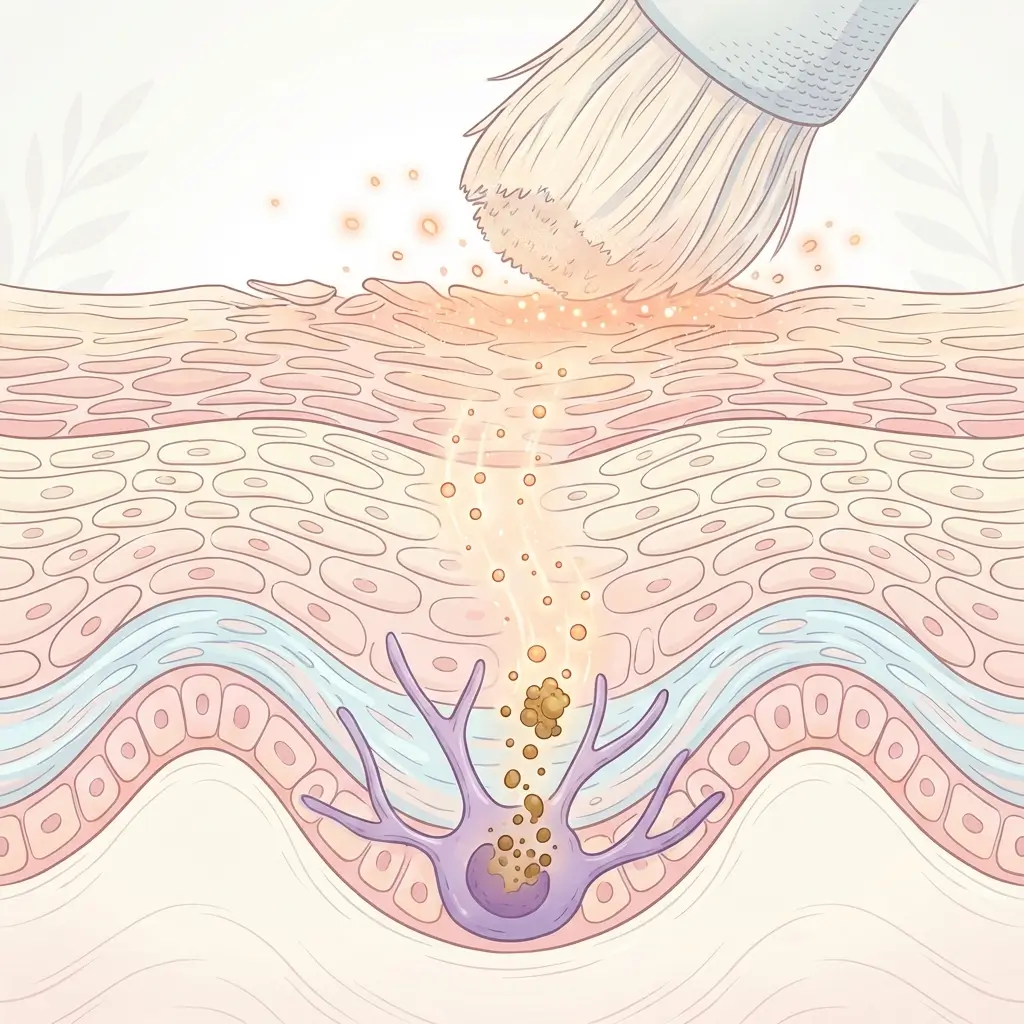
Damaged skin cells release chemical messengers, the same ones involved in wound healing after a procedure: prostaglandins, interleukins, endothelin-1 (the same inflammatory mediators behind every pigment trigger). These signals do two things at once. They coordinate tissue repair, and they talk directly to your melanocytes.
When melanocytes pick up those signals, they respond the way they always respond to perceived danger. They ramp up pigment production, push melanin out into the surrounding cells, and darken the area. It is a protective response, an attempt to shield vulnerable tissue from UV. But when the trigger is just friction from a bra strap or irritation from shaving, that protection shows up as a dark patch you did not ask for.
The key thing to understand is that the trigger does not need to be dramatic. It does not even need to break the skin. It just needs to create enough micro-inflammation to get the melanocytes' attention.
The everyday triggers most people do not connect to pigmentation
Once you understand the mechanism, the list of potential triggers gets surprisingly long. These are not exotic injuries. They are things most of us encounter constantly.
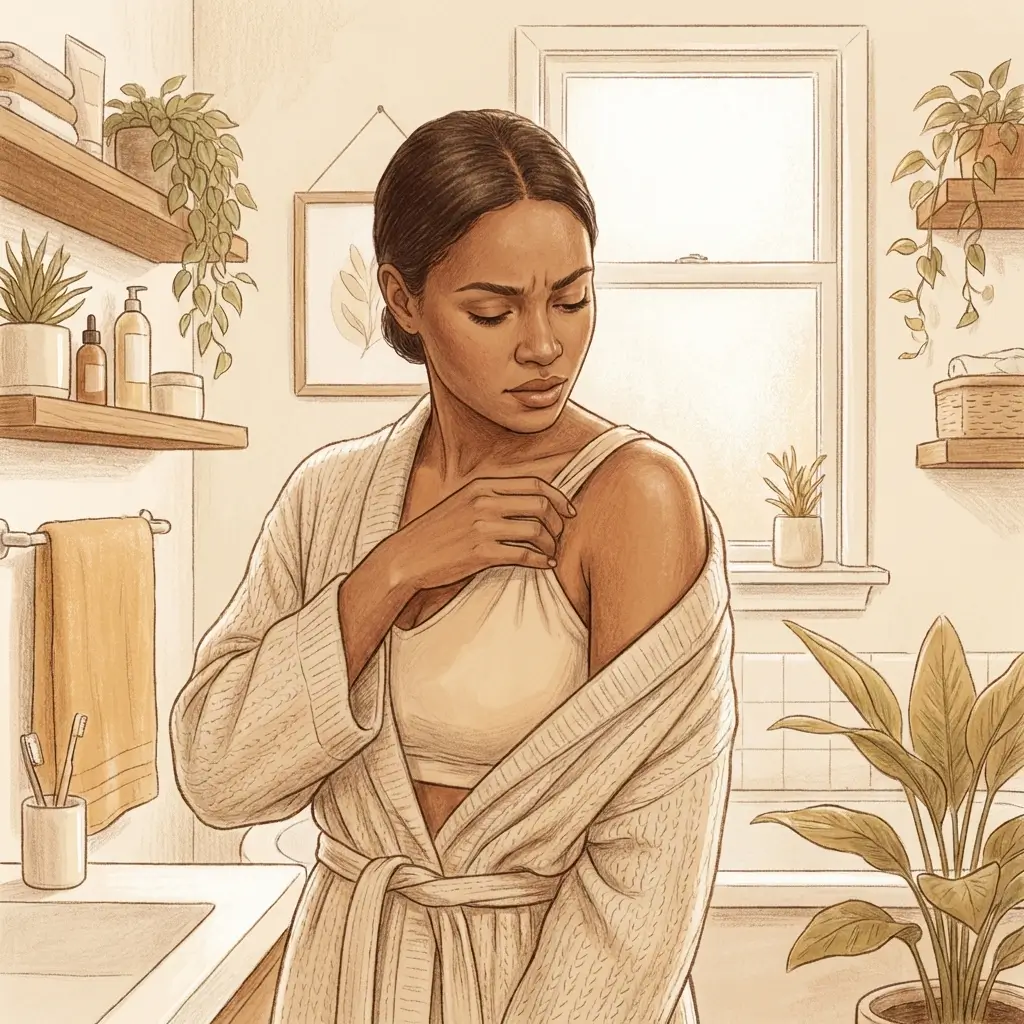
- Friction from clothing and accessories. Bra straps, waistbands, tight collars, watch bands, mask edges. Anywhere fabric or material rubs the same patch of skin repeatedly, day after day, micro-inflammation accumulates.
- Shaving. A razor blade scraping across skin is mechanical trauma. It removes the very top layer of cells and creates micro-abrasions along the way. In areas where you shave frequently (bikini line, underarms, face), the skin barely finishes healing before the next pass.
- Waxing and epilating. Pulling hair from the follicle is a more forceful injury than shaving. It damages the follicular wall, triggers a localised inflammatory response around every extracted hair, and can leave behind the characteristic dark dots or diffuse darkening that so many women notice after years of waxing the same areas.
- Scratching and picking. Insect bites, eczema flares, acne you cannot leave alone. The scratch itself is mechanical damage, and if the area is already inflamed (which it is, that is why it itches), you are adding a second inflammatory trigger on top of the first.
- Minor burns and abrasions. Curling iron touches, friction burns from exercise equipment, rug burns, cooking splatters. Small enough that you barely register them. Enough to activate the pathway.
None of these feel like "skin trauma" in the moment. That is exactly why the resulting pigmentation catches people off guard.
Why repetition is what makes it stick
A single friction event or one shaving pass is unlikely to produce visible hyperpigmentation on its own. The inflammatory signal is too brief and too mild. Your melanocytes respond, but the pigment produced is minimal and fades as the cells turn over normally.
The problem starts when the same area gets hit again and again.
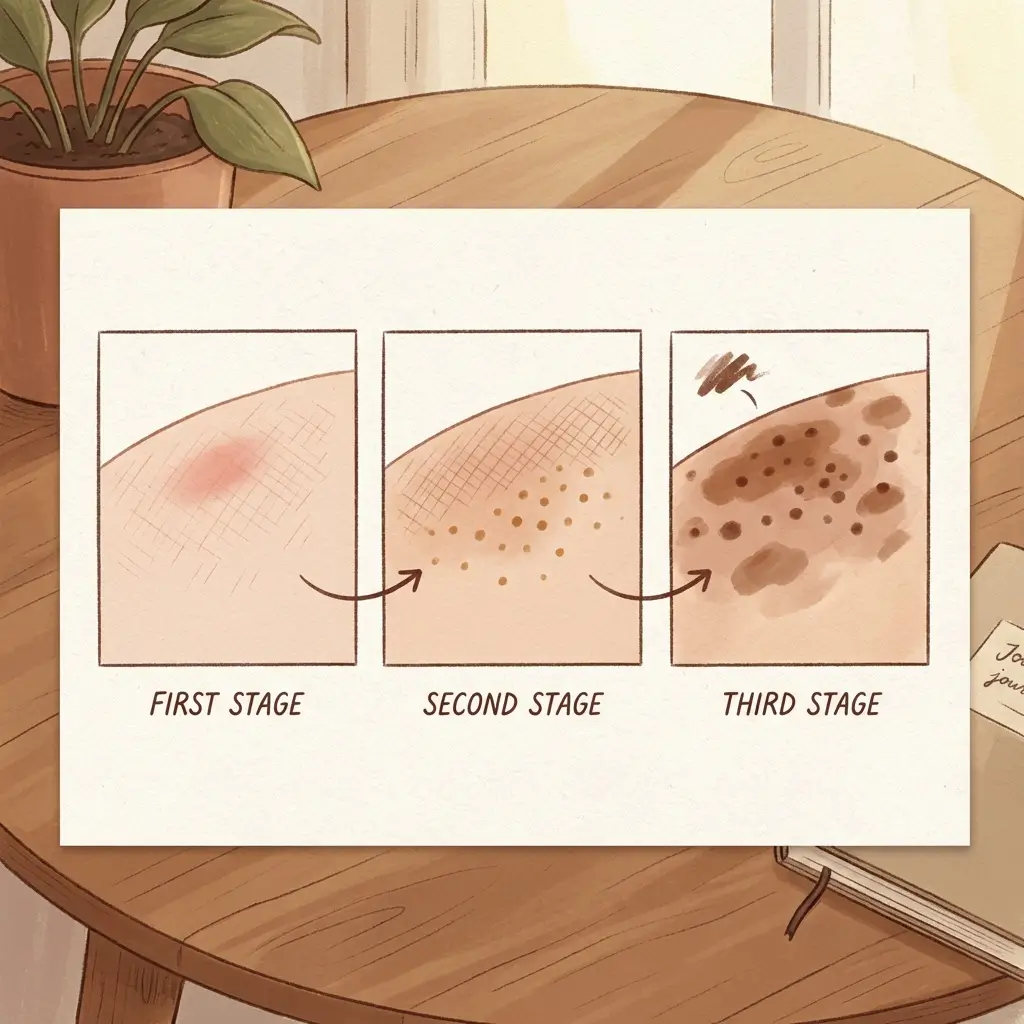
Every time the same patch of skin is irritated, the inflammatory cycle restarts before the previous one has fully resolved. Melanocytes in that area never fully return to baseline. They stay in a mildly activated state, producing pigment at a slightly elevated rate all the time, with periodic spikes every time the friction or irritation recurs.
Over weeks and months, this pattern builds. The pigment accumulates faster than your skin can shed it. What started as a faint shadow becomes a visible dark patch. And because the melanocytes in that area have been chronically stimulated, they become increasingly sensitive to the trigger, meaning it takes less and less irritation to provoke the same response.
This is why the bikini line darkens gradually over years of shaving or waxing. It is why the underarms darken in a way that does not match the rest of your skin. It is why the inner thighs, the neck, the areas where clothing rubs constantly, develop pigmentation that seems to come from nowhere and resist everything you throw at it.
It did not come from nowhere. It came from repetition.
Why melanin-rich skin reacts more strongly to mechanical triggers
If you have noticed that darker skin seems to mark and darken more easily from friction and minor injuries, you are not imagining it. There is a biological reason.
Melanocytes in melanin-rich skin operate at a higher baseline. Their melanin-producing machinery is more efficient, their melanosomes are larger, and their threshold for activation is lower. This means the amount of inflammation needed to trigger a visible pigment response is genuinely smaller than it would be in lighter skin.
The same bra strap, the same razor, the same waistband. In lighter skin, the micro-inflammation might produce a response that is invisible or fades within days. In darker skin, the melanocytes are more reactive to the same input, produce more pigment per activation, and that pigment is more visible against the surrounding skin.
This is also why the repetition effect can be more pronounced. If melanocytes return to a higher resting state after each irritation cycle, the cumulative build-up happens faster. Areas that lighter-skinned people might never notice darkening in (inner thighs, underarms, the fold of the elbow) can develop noticeable pigmentation in melanin-rich skin from everyday friction alone.
It is not that your skin is more damaged. It is that your melanocytes are more responsive. The same signal produces a bigger output.
The difference between this and post-inflammatory hyperpigmentation from acne or procedures
If you have read about post-inflammatory hyperpigmentation in the context of acne or procedures, you might be wondering whether this is the same thing. In terms of the core mechanism, it is. The pathway from inflammation to melanocyte activation to excess pigment is identical.
The difference is in the pattern.
With acne or a procedure, you typically have a single inflammatory event (a breakout, a laser session) followed by a healing period. The pigment either fades as the skin turns over or it does not, but the trigger is discrete. You can point to when it started.
With mechanical trauma, the trigger is not a single event. It is a pattern of repeated low-grade insults that overlap. There is no clear start date. The pigment develops gradually, and because the trigger is woven into daily life (getting dressed, shaving, exercising), it keeps getting reinforced without the person realising it.
This is what makes friction-related and hair-removal-related pigmentation so frustrating. The cause is often invisible because it is ordinary.
What to take from this
This is about the mechanism, the why behind the darkening. Knowing why it happens is the first step, because it changes how you think about the problem. It is not a stain to scrub off. It is an active, ongoing response to a physical trigger, and as long as the trigger continues, the pigmentation will too.
For practical strategies around reducing friction-related and hair-removal-related pigmentation, hyperpigmentation prevention covers that in detail.
The most important thing to take away is that your skin does not need a dramatic injury to produce dramatic pigment. It just needs a small injury, repeated.


