


This one is invisible to most people. There is no single event, no product reaction, no sunburn. Nothing changes on the outside. But gradually, pigmentation appears or deepens in ways that do not track with anything you are doing to your skin. And no matter what you adjust in your routine, it does not respond the way you expect.
When that pattern shows up, the cause is often internal. And one of the most common and least discussed internal drivers is blood sugar regulation.
Not diabetes necessarily. Not a dramatic diagnosis. Just the slow, quiet shift in how your body handles glucose, a shift that millions of women are living with and most do not know about. That shift changes the environment your skin operates in, and pigmentation is one of the first places it shows.
What blood sugar regulation means in this context
When you eat, your body converts carbohydrates into glucose. Insulin is released to move that glucose from your blood into your cells, where it gets used for energy. In a well-regulated system, blood sugar rises after a meal, insulin responds, glucose is cleared, and levels return to baseline.
When regulation starts to break down, two things happen that matter for your skin.
The first is insulin resistance. Your cells become less responsive to insulin, so your body produces more of it to compensate. Blood insulin levels stay elevated even when glucose levels look normal on a standard test. This can simmer for years before it shows up in routine bloodwork.
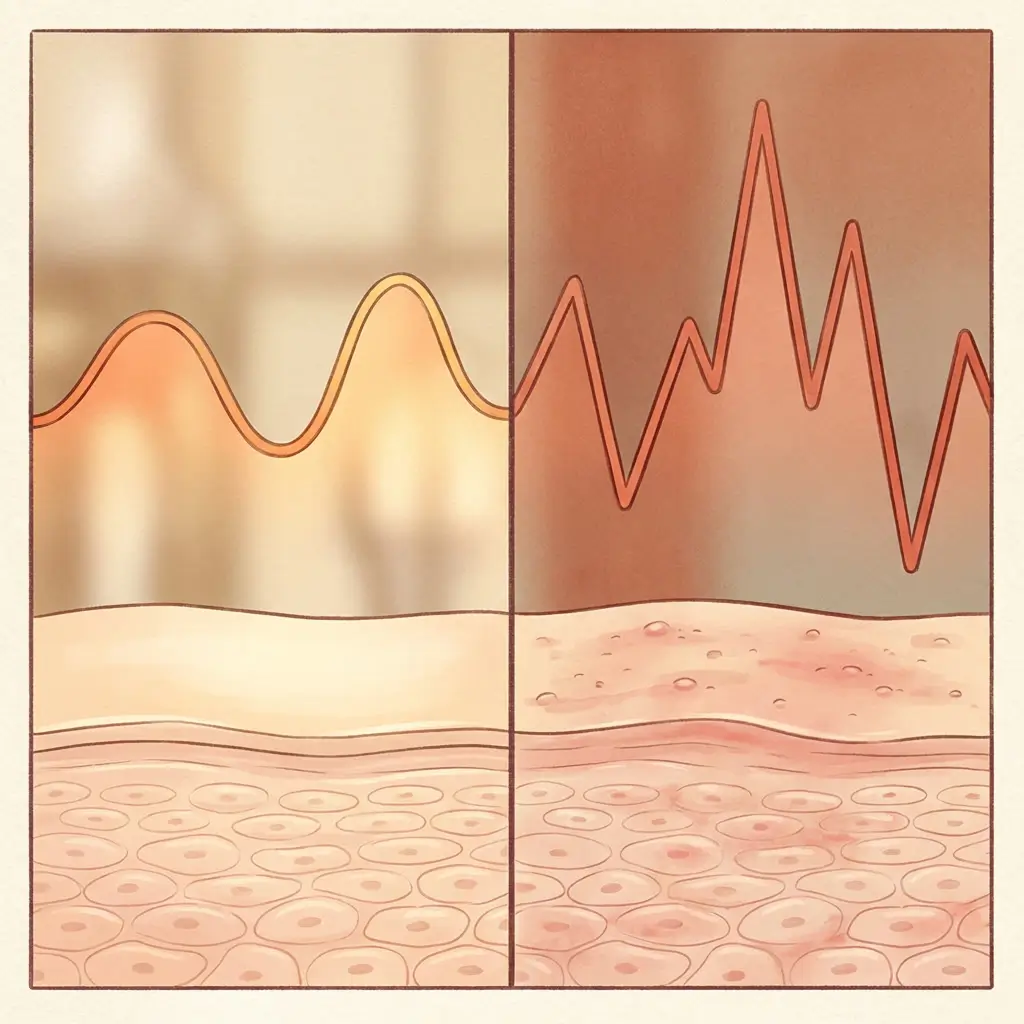
The second is glycemic variability. Instead of smooth, gentle rises and falls, blood sugar swings between sharp spikes and drops. Those swings are not just uncomfortable (the energy crashes, the cravings, the brain fog). Each one triggers a small inflammatory response. And when the swings happen multiple times a day, every day, the inflammation never fully resolves.
How this reaches your melanocytes
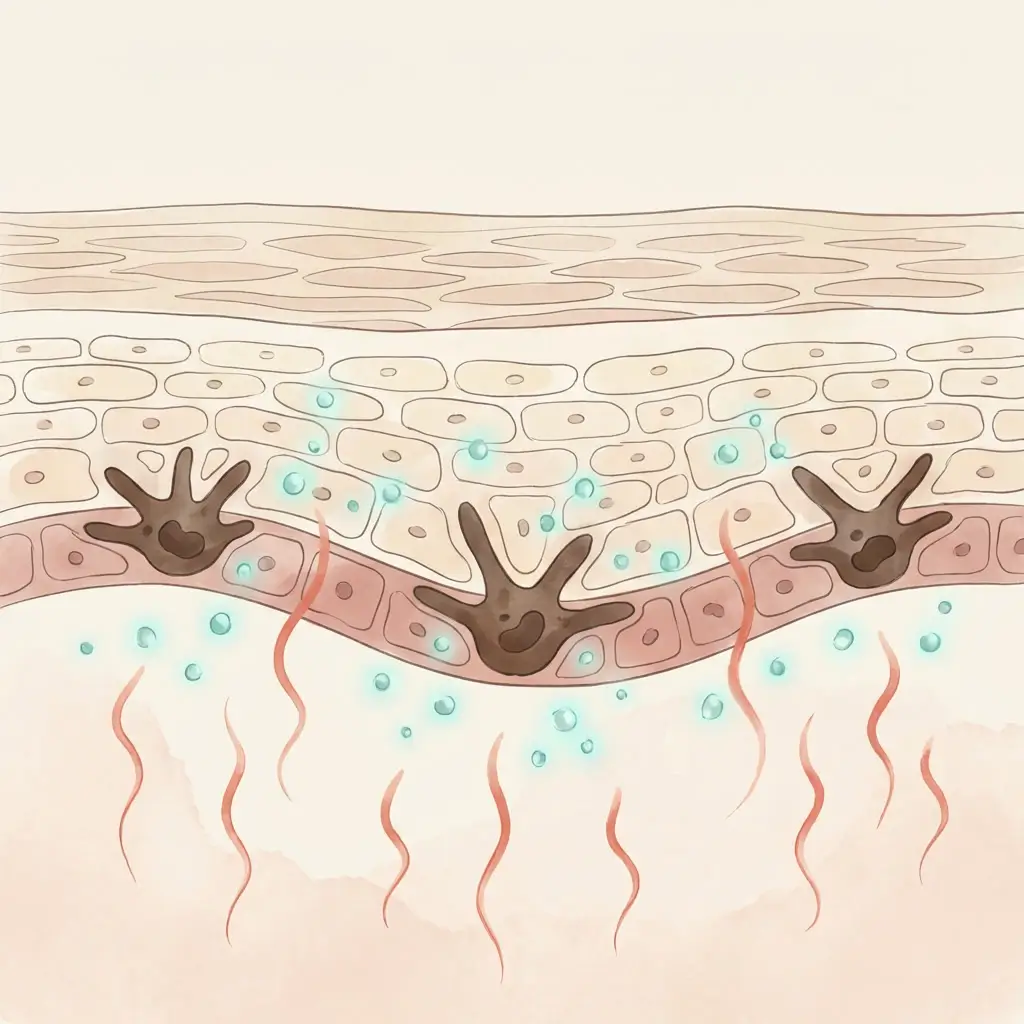
Blood sugar dysregulation does not affect your melanocytes directly the way UV or hormones do. It works through the environment. It changes the conditions your melanocytes operate in, making them more reactive to every other trigger.
There are three main pathways.
Chronic low-grade inflammation
This is the most significant one. Insulin resistance and glycemic variability both produce a sustained state of low-grade systemic inflammation. The same inflammatory mediators that activate melanocytes after a breakout or a procedure are circulating at mildly elevated levels all the time.
Your melanocytes are not receiving a single loud signal. They are receiving a constant hum. And that hum lowers the threshold at which other triggers produce a visible pigment response. UV exposure that your skin used to handle without marking may now leave a dark spot. Friction that was never an issue may start producing visible darkening. A mild product irritation that would have resolved in a day now triggers pigment that lasts for months.
The inflammation is not dramatic enough to feel like a health crisis. But it is enough to shift how your melanocytes behave.
Oxidative stress
Glycemic variability generates reactive oxygen species (free radicals) with every spike and crash. Over time, this creates a state of chronic oxidative stress that outpaces your body's antioxidant defences.
Oxidative stress damages skin cells at every level. It disrupts the signalling environment melanocytes sit in. It degrades the structural components of the skin. And it accelerates the formation of advanced glycation end products (AGEs), which are proteins or lipids that have been damaged by sugar molecules. AGEs accumulate in the skin, stiffen collagen, impair cell turnover, and generate their own inflammatory signals. They are one of the reasons blood sugar issues make the skin age faster and heal slower, and they contribute directly to the environment that makes pigmentation harder to shift.
Elevated insulin itself
This is the pathway most people do not know about. Melanocytes have receptors for insulin and insulin-like growth factor (IGF-1). When insulin levels are chronically elevated, those receptors are being stimulated continuously.
The most visible example of this is acanthosis nigricans, the velvety darkening that appears in skin folds, the neck, the underarms, and the groin. It is one of the earliest clinical signs of insulin resistance, and it is caused directly by insulin stimulating skin cell and melanocyte activity in areas of friction and pressure.
But the effect is not limited to those characteristic patches. Elevated insulin creates a body-wide shift in how sensitive your melanocytes are. The darkening in skin folds is just where it is most visible. The same underlying insulin-driven stimulation affects melanocytes everywhere.
Why this makes existing pigmentation worse
If you already have hyperpigmentation from another cause, whether it is hormonal, post-inflammatory, sun-related, or friction-driven, blood sugar dysregulation makes it harder to treat and slower to resolve.
The reasons are mechanical. Chronic inflammation keeps melanocytes in a mildly activated state, so treatments have to work against ongoing pigment production rather than just clearing what is already there. Impaired cell turnover means pigmented cells sit in the skin longer before being shed. Oxidative stress depletes the internal resources your skin needs to respond to topical treatments effectively.
This is one of the most common patterns behind pigmentation that does not respond the way it should. You are doing everything right on the surface. The routine is correct. The products are appropriate. But the internal environment is working against you, and no amount of topical treatment can fully compensate for that.
The stress connection
Blood sugar regulation and stress are not separate systems. They are deeply interconnected.
Cortisol, your primary stress hormone, directly raises blood glucose levels. That is its job during acute stress: liberate energy so you can respond to a threat. But when stress is chronic, cortisol stays elevated, and blood sugar stays elevated with it. Over time, this contributes to insulin resistance even in people who eat well.
The cycle works in both directions. Poor blood sugar regulation makes you more stress-reactive (the crashes trigger cortisol release). Chronic stress worsens blood sugar control. And both pathways converge on the same outcome: elevated inflammation, elevated oxidative stress, and melanocytes operating in a more reactive internal environment.
If you are dealing with pigmentation that seems to worsen during stressful periods and you also notice energy crashes, cravings, or difficulty maintaining stable energy through the day, the two are likely connected.
Why melanin-rich skin is more affected
The pattern is consistent with every other internal trigger. Melanocytes in melanin-rich skin operate at a higher baseline and respond more strongly to the same stimulus.
The ambient inflammatory and insulin-driven signals from blood sugar dysregulation that might produce no visible pigment changes in lighter skin can produce noticeable darkening in deeper skin tones. Acanthosis nigricans is significantly more common and more visible in women with melanin-rich skin, not because the insulin resistance is worse, but because the melanocyte response is stronger.
This also means that the threshold at which blood sugar issues start affecting pigmentation is lower. Mild insulin resistance that would not register as a health concern in a standard medical assessment can already be shifting how your melanocytes behave in melanin-rich skin.

Signs worth paying attention to
Blood sugar dysregulation is not always obvious. Many women live with mild insulin resistance for years without a clear diagnosis. But there are patterns that, especially in combination, are worth investigating:
- Darkening in skin folds, the neck, underarms, or groin that does not have another clear cause
- Pigmentation that worsens despite a consistent, well-chosen routine
- Energy crashes mid-afternoon or after meals
- Strong sugar or carbohydrate cravings
- Difficulty losing weight, particularly around the midsection
- Feeling foggy, shaky, or irritable when meals are delayed
- A family history of type 2 diabetes or PCOS
PCOS deserves a specific mention here. Polycystic ovary syndrome involves insulin resistance as a core feature, not just a hormonal imbalance. Many women with PCOS notice hyperpigmentation (especially acanthosis nigricans and worsening melasma) as one of their earliest visible symptoms. If you have PCOS and pigmentation issues, the insulin component is almost certainly a contributing factor.
A fasting insulin test (not just fasting glucose) is the most useful screening tool. Glucose can stay in the normal range for years while insulin climbs to compensate. By the time glucose is elevated, insulin resistance has usually been present for a long time. Ask for the insulin test specifically.
What to take from this
Blood sugar regulation is not the first thing most people think of when their pigmentation will not clear. But it is one of the most common internal factors quietly shaping melanocyte behaviour, particularly in women with melanin-rich skin, PCOS, or a family history of metabolic issues.
The mechanism is not complicated. Dysregulated blood sugar raises your inflammatory baseline, increases oxidative stress, and directly stimulates melanocytes through elevated insulin. That shifts the environment your skin operates in and lowers the threshold at which every other trigger produces a visible pigment response.
You cannot treat your way out of this with topicals alone. If blood sugar dysregulation is part of the picture, it needs to be addressed as part of the picture. That does not necessarily mean medication. For many women, changes in how they eat, how they manage stress, and how they support their body internally can meaningfully improve insulin sensitivity and reduce the inflammatory load their skin is dealing with.
The value of knowing about this connection is practical. If your pigmentation is not responding despite doing everything right on the surface, this is one of the internal factors worth investigating.
The answer is not always on your skin. Sometimes it is in what your skin is swimming in.


