


You didn't change your routine. You didn't start a new product. But somewhere during pregnancy, or after starting birth control, or alongside other hormonal shifts, areas of your body that were always fine started darkening. Underarms. Bikini line. Inner thighs. Skin folds.
The change feels random, but it isn't. Hormones are one of the strongest drivers of body hyperpigmentation, and they work in ways that surface treatment alone can't fully address.
Two ways hormones darken body skin
Not all hormonal darkening works the same way. There are two distinct patterns, and knowing which one you're dealing with changes what you do about it.
The first: your skin becomes more reactive. Your underarms or inner thighs have always dealt with friction from clothing, movement, and grooming. Before the hormonal shift, your skin handled all of that without producing visible pigment. After the shift, the same everyday contact suddenly leaves marks.
The hormones didn't darken your skin directly. They made your melanocytes more sensitive, so triggers they used to shrug off now get a pigment response. This is why women often say the darkening appeared "out of nowhere" during pregnancy or after starting birth control. The friction was always there. Your skin just started reacting to it.
The second: hormones drive the pigment directly. This is what's happening with linea nigra during pregnancy, areola darkening, and darkening in skin folds that have no friction or grooming trigger at all. Oestrogen and progesterone can talk directly to melanocytes through receptors in the skin, telling them to produce more pigment with no external trigger needed. The signal is coming entirely from the inside.
Most women are dealing with a mix of both. The hormones darken certain areas directly while also making everyday friction and grooming leave marks they never used to. That overlap is part of what makes hormonal body darkening so frustrating. You can reduce the friction, but the hormonal signal is still running underneath.
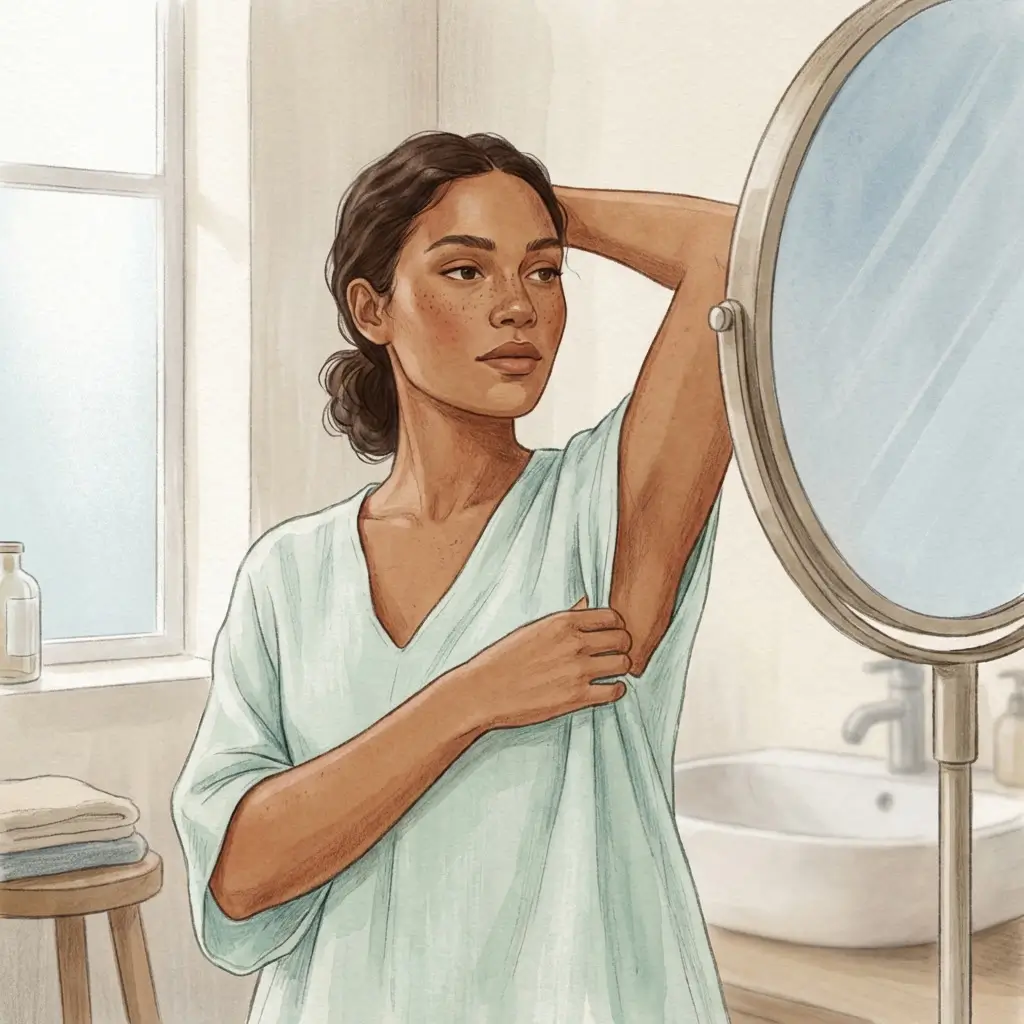
Why it shows up in these areas and not others
There's a reason hormonal darkening targets the underarms, bikini line, inner thighs, and groin folds rather than your forearms or shins. Three things come together in these zones:
- More melanocytes. Skin folds, underarms, and the areas around the bikini line naturally have more pigment-producing cells packed into them. More melanocytes means a stronger visible response when anything triggers them, whether that's hormones, friction, or both.
- More hormonal sensitivity. The skin in these areas has more receptors for oestrogen and progesterone than most of the body. When hormone levels shift, these zones pick up the signal first and respond the strongest.
- Constant coverage and contact. These areas are always covered, warm, and pressed against fabric or other skin. Any increase in pigment reactivity gets compounded by the friction and heat they deal with every day.
What triggers the shift
Pregnancy is the most dramatic. Rising oestrogen and progesterone directly stimulate melanocytes, which is why linea nigra, areola darkening, and skin fold darkening are so common in the second and third trimesters. Much of this fades after delivery, but not always completely, and areas that also deal with friction tend to hold pigment longer.
Birth control containing oestrogen can produce a quieter version of the same effect. The change happens gradually, and the darkening tends to creep in over months rather than appearing suddenly. Women on combined oral contraceptives sometimes don't connect the darkening to their medication because the timeline is so slow. Birth control and hyperpigmentation covers how that works in more detail.
PCOS and insulin resistance add another layer. Elevated androgens and insulin both affect melanocyte activity, and the darkening can overlap with friction zones in ways that make it hard to separate what's hormonal from what's physical. If darkening is showing up in skin folds and you're also noticing changes in skin texture, it's worth checking whether insulin resistance is part of the picture. Blood sugar and hyperpigmentation explains that connection.
Perimenopause brings fluctuating oestrogen that can wake up pigmentation patterns that had been quiet for years. Women in their forties sometimes notice body areas darkening again after a long stretch of no change. The friction and grooming history from decades of daily life is still there. The hormonal shift just makes the skin reactive to it again.
What happens when the hormonal trigger passes
This depends on which pattern is driving the darkening.
Darkening that was driven directly by hormones, like linea nigra, often fades significantly once hormone levels settle after pregnancy or after stopping birth control. The timeline varies, but the direction is usually toward improvement without needing aggressive treatment.
Darkening that built up because hormones made your skin more reactive is harder to predict. Even after the hormonal shift resolves, the pigment that was laid down during that reactive period doesn't automatically clear. The friction and grooming that triggered it are still part of daily life, and the skin may need active support to fade what's already there. Some women find the darkening stabilises but doesn't fully resolve, especially in areas where the friction and grooming continue.
The practical takeaway: waiting for hormones to settle is part of the strategy, but it's rarely the whole strategy. If friction or grooming are part of the picture, those need attention regardless of where the hormonal situation lands.
Why surface treatment has a ceiling here
When the driver is hormonal, it's systemic. It's reaching your melanocytes from the inside, through your bloodstream, not through the skin surface. A topical product can work on pigment that's already been produced, but it can't intercept the signal that's telling your melanocytes to keep producing.
This is where internal support reaches what topicals can't. Addressing pigmentation at the signalling layer, where production decisions are being made, works alongside surface treatment rather than competing with it. For hormonal body darkening specifically, where the driver is internal and the practical barriers to topical treatment are highest, that combination matters more than it does for most other types. The inside out approach covers how that works.
What to do when hormones are the primary driver
If you're currently pregnant or in the middle of a hormonal shift, aggressive treatment isn't the right move. Your melanocytes are in a heightened state of reactivity, and pushing actives during this window risks creating new irritation that adds to the problem.
Focus on protection and barrier support during the active hormonal phase. Reduce friction where you can. Be gentle with grooming. Keep the skin moisturised and calm. This isn't doing nothing. It's preventing the friction and grooming from piling on while your hormones are amplifying the response.
Once the hormonal trigger has stabilised, that's when a more active approach makes sense. Gentle brightening ingredients introduced gradually, spaced away from grooming sessions, and given time to work. If friction or hair removal are also part of the picture, address those triggers first. The pigment fades faster when the signals driving it have quietened down.
If you're dealing with ongoing hormonal changes that aren't going to resolve, like PCOS or long-term birth control, the approach shifts from "wait it out" to "manage the environment." That means being more deliberate about friction reduction, grooming methods, and supporting the skin from the inside, because the hormonal signal isn't going away.
Hormonal body darkening doesn't respond to the same urgency that works for other types of pigmentation. The approach that works here is slower, more protective, and more patient, because the driver isn't on the surface.


