


A one-time injury leaves one mark. Your skin heals, the pigment fades, and the process is fairly predictable. Friction-driven hyperpigmentation is a different situation entirely. The trigger doesn't happen once and leave. It happens every day, all day, and the skin never gets the break it needs to fully recover.
That changes everything about how you treat it.
Why repeated contact is different from a single injury
When your skin is injured once, it heals. Pigment gets laid down during recovery, but once the irritation is over, your skin can start clearing that pigment on its own.
Repeated friction never gives your skin that chance. Each day brings a fresh round of irritation before the last one has healed. Your skin is still trying to recover from yesterday's friction when today's starts. So pigment keeps building in layers, day after day, week after week. Over months, those layers add up to darkening that looks much worse than any single day of rubbing would explain. It's not one bad event. It's hundreds of small ones that never stop. The role of inflammation covers why ongoing irritation keeps the pigment coming.
Where it shows up
Bra straps and underwire. The straps dig into the same spot on your shoulders every day, and underwire presses against the same curve of skin under the bust. The pressure is constant and the skin can't escape it. Over months, you'll see a darkened line that traces exactly where the bra sits. Tighter bras, poorly fitted bras, and underwire that shifts during the day make it worse.
Waistbands, elastic, and tight clothing. Anything that grips your skin and moves against it throughout the day. Jeans with a stiff waistband, shapewear, tight leggings, underwear elastic. The darkening usually follows the line of the garment exactly, which is one of the easiest ways to identify friction as the cause.
Inner thigh rubbing. Skin rubbing against skin during walking, exercise, or daily movement. This one is especially persistent because you can't remove the trigger entirely. The friction is a consequence of having thighs, not of wearing the wrong thing. That makes the approach more about managing the contact than eliminating it.
Laptop heat on thighs. This one works differently, but it ends up in the same place. Repeated heat exposure from a laptop resting on your thighs can produce a distinctive mottled or web-like pattern of discolouration called erythema ab igne. It's caused by heat rather than pressure, but the principle is the same: ongoing exposure that never lets the skin reset.
Seatbelts and bag straps. Less obvious but still real. A seatbelt crossing the same spot on your chest or neck every day, a heavy bag strap pressing into your shoulder during your commute. The contact feels minor, but over months of daily repetition, it adds up.
Remove the trigger first, not actives first
The instinct is to reach for a brightening product. That's what works for most hyperpigmentation, and it's the advice you'll find almost everywhere. But friction-driven darkening doesn't respond to that while the trigger is still active.
If you're applying a brightening serum to skin that's being rubbed by a waistband for eight hours a day, the product is fighting a battle it can't win. The friction keeps generating fresh irritation that keeps producing fresh pigment. The active might clear some of what's already there, but more is being laid down every day. Progress stalls or moves backwards, and it feels like the product isn't working.
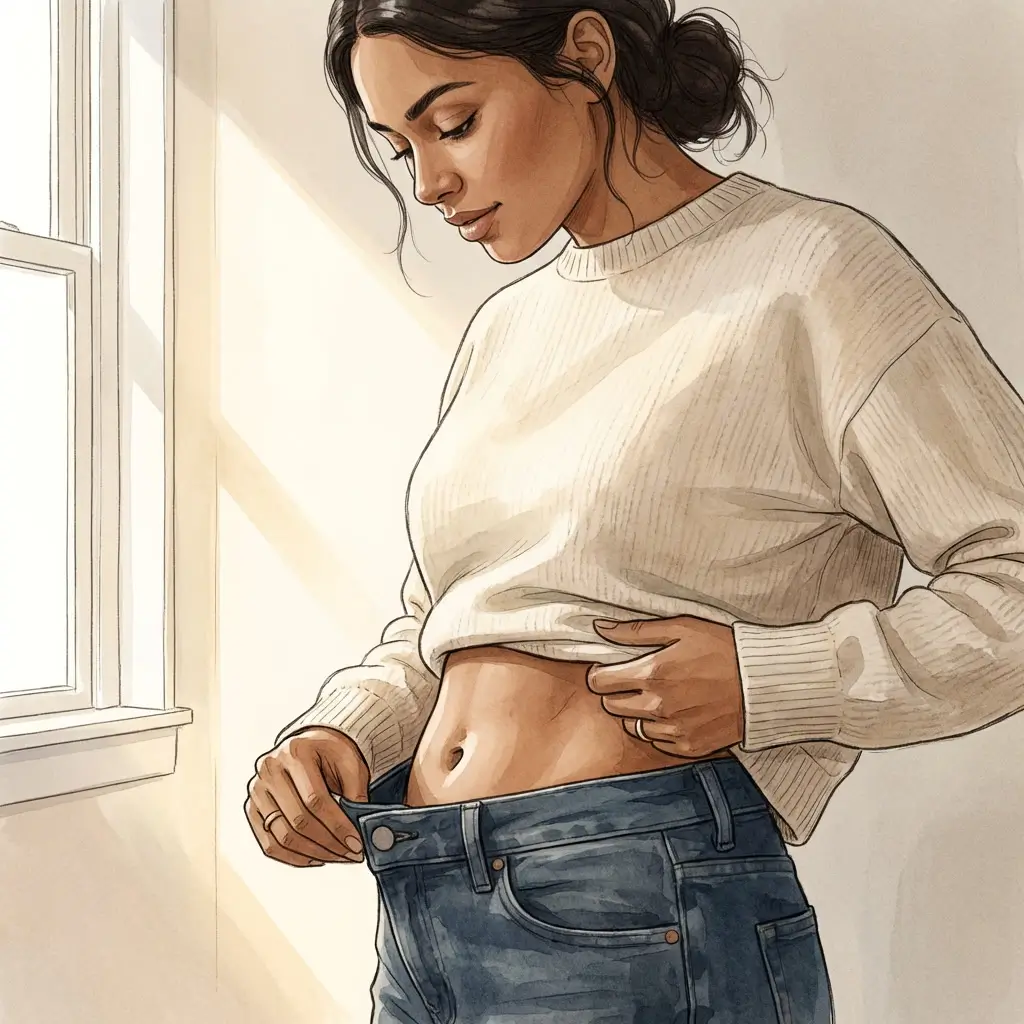
The first step is always reducing the friction. That doesn't mean perfection. You can't stop wearing clothes. But you can switch to softer fabrics, loosen waistbands, get a bra fitting, use anti-chafe balm on inner thighs, and stop wearing the specific garment that's pressing into the exact area that's darkening. Even partial reduction makes a meaningful difference because you're slowing the rate of new pigment faster than any active can clear it. Why friction causes hyperpigmentation explains the deeper biology, and fading friction-driven hyperpigmentation gets into specific approaches.
Barrier repair before brightening
Once you've reduced the friction, the next step isn't actives. It's letting the skin recover.
Skin that's been under constant friction has a worn-down barrier. It's drier, more sensitive, and more reactive than healthy skin. Putting an exfoliating acid or a strong brightening active on that skin is like putting disinfectant on a fresh graze. It's doing the right thing at the wrong time.
Spend a few weeks with a simple, fragrance-free moisturiser or a barrier repair balm before you introduce anything active. The skin needs to rebuild its protective layer first. Once the barrier is intact, gentler ingredients like niacinamide, alpha arbutin, or azelaic acid can work the way they're supposed to. These suit friction zones better than aggressive exfoliants because they brighten without adding more irritation to skin that's already had enough.
Where topicals hit their ceiling
Even with the trigger reduced and the barrier repaired, topicals on friction zones have limits. These areas are covered by clothing for most of the day, which means products get wiped off, rubbed away, or diluted by sweat before they've had enough contact time to work properly. You can do everything right with product selection and timing, and the delivery problem still holds you back.
This is where addressing pigmentation from the inside makes a practical difference. When you support the skin at the signalling layer, where pigment production decisions are being made, delivery doesn't depend on a product staying on the surface. It reaches friction zones, covered areas, and skin folds equally, without the contact-time problem that limits topicals on the body. The inside out approach covers how that works.
When friction isn't the whole story
If your friction areas started darkening suddenly after a hormonal change like pregnancy or birth control, the friction may not be the only driver. Hormonal shifts can make your skin react to contact that never caused problems before. Hormonal body darkening covers that pattern.
If the darkening in skin folds comes with a texture change, thickened or velvety skin rather than just colour, that's a different condition worth discussing with your doctor. Acanthosis nigricans explains what to look for.
Friction-driven hyperpigmentation is slow to build and slow to clear. But once you stop fighting the trigger and start working with the skin's recovery process, the progress is real. Reduce the contact, repair the barrier, then treat. In that order.


