


If you have been using brightening serums on your sun spots for months and barely seeing a difference, it is not because the products are fake. It is because sun spots are a different kind of problem, and they do not respond to the same approach that works for post-breakout marks or melasma.
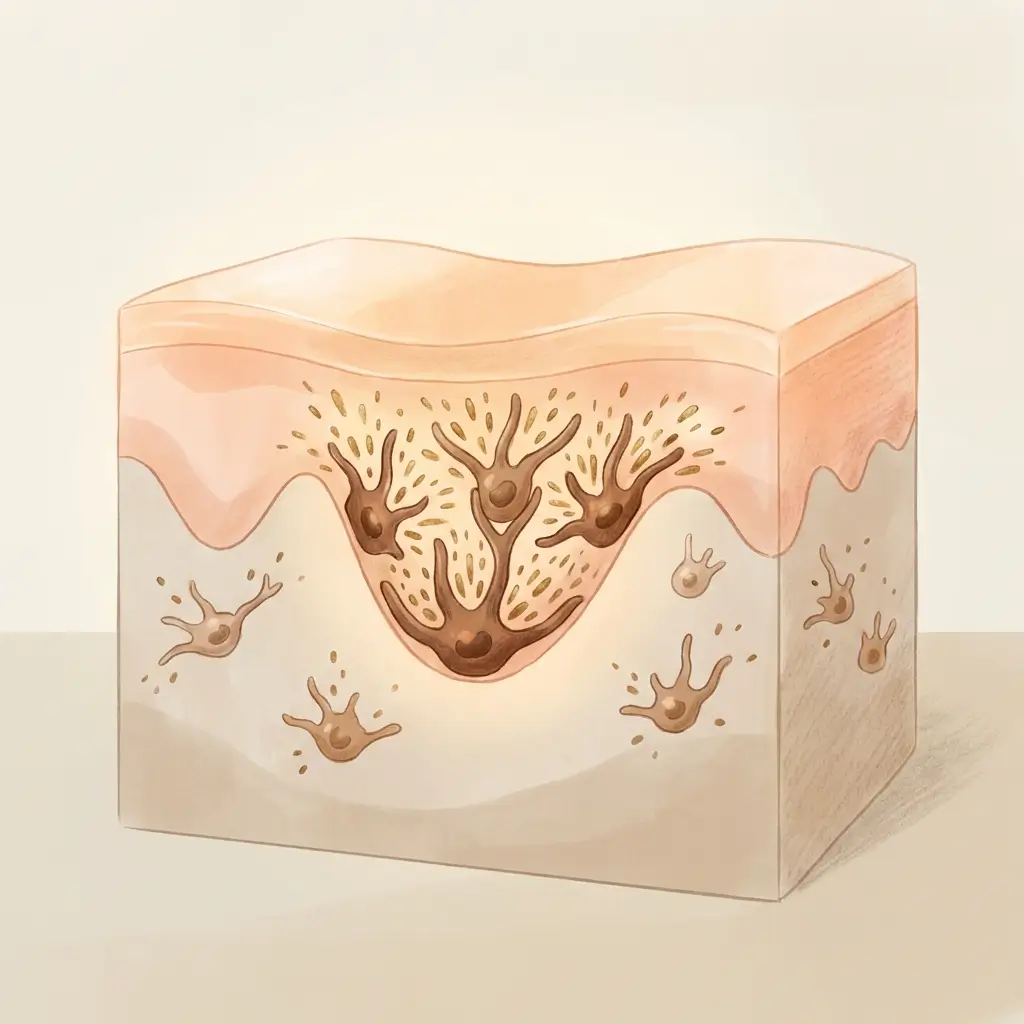
PIH is pigment left behind by a one-time injury. Melasma is pigment driven by an ongoing hormonal process. Sun spots are neither. They are the result of structural changes in the skin caused by years of cumulative UV exposure. The melanocytes in those areas have been permanently altered. They are larger, more numerous, and stuck in an "on" position. The pigment you see is not just a stain sitting on the surface. It is being actively produced by cells that have been reprogrammed by decades of sun.
That does not mean sun spots are untreatable. They are. But it does mean the expectations, the timeline, and the tools look different from what works for other types of hyperpigmentation.
Why sun spots are stubborn
With PIH, you are dealing with excess pigment that the skin is already trying to clear. Give it time, protect it from UV, support the process, and the marks fade because the underlying melanocytes have calmed down.
Sun spots do not work that way. The melanocytes in a sun spot have undergone lasting changes from cumulative UV damage. They are not temporarily overactive. They have been structurally remodelled. The cluster of cells is denser, the individual melanocytes are enlarged, and they continue producing excess melanin even when you are doing everything right with sun protection.
This is why a dark mark from a breakout can fade in a few months while a sun spot that has been there for years barely budges with the same products. The spot is not lingering pigment. It is a pigment-producing factory that has been rebuilt to run permanently.
Because sun spots are localised (each one is a defined cluster rather than a diffuse hormonal pattern like melasma), they respond well to targeted treatments. And because the trigger is cumulative UV rather than an active hormonal driver, you do not have the same rebound risk that makes melasma so tricky. The challenge is getting deep enough to make a difference, without causing collateral damage.
Step 1: Stop adding to the damage
This sounds obvious, but it needs to be said clearly: every sun spot you have started as UV damage. And the same UV exposure that created the existing spots is creating the conditions for new ones and keeping the altered melanocytes in the current spots active.
Sun protection with sun spots is not just about preventing new damage. It is about reducing the ongoing UV stimulation of melanocytes that are already overactive. Without it, every treatment you use is working against a tide that never stops.
- Broad-spectrum SPF 30 or higher, reapplied during the day. Every day.
- Physical barriers (hats, sunglasses, shade) matter, especially if your sun spots are in areas that get consistent incidental exposure like the face, hands, and chest.
- Be realistic about your actual UV exposure. "I am mostly indoors" still includes the drive to work, the walk to lunch, the window you sit next to. UV is cumulative. That is the whole reason sun spots exist.
This is the baseline. Everything below works on top of it.
Step 2: Support your skin's defences from the inside
Years of UV exposure do not just affect melanocytes. They create systemic oxidative stress, deplete the skin's natural antioxidant reserves, and weaken the cellular repair mechanisms that would normally help keep melanocyte behaviour in check.
By the time sun spots become visible, the internal environment has been under pressure for a long time. The skin's ability to neutralise free radicals, manage inflammation, and turn over damaged cells efficiently has been gradually worn down. Topicals can work on the surface, but they cannot rebuild that internal capacity.
Supporting the process from the inside means replenishing antioxidant defences, reducing the oxidative burden that keeps damaged melanocytes firing, and giving the skin the nutritional raw materials it needs to renew itself more efficiently. Oral photoprotection also plays a role here, adding a complementary internal layer of UV defence alongside sunscreen.
Our Hyperpigmentation Cleanse Capsules are designed to work at this level. The full formulation breakdown, including how each ingredient targets a specific internal pathway, is on the supplements page.

Step 3: Topicals for sun spots
Topicals can improve sun spots, but expectations need to be calibrated. They work by slowing melanin production and accelerating the turnover of pigmented cells. For lighter, more recent spots, this can produce visible fading. For deeper, well-established spots, topicals alone may lighten but are unlikely to fully clear them. That is not a failure. It is the nature of what you are treating.
The most effective options
- Retinoids (retinol, tretinoin) are arguably the single most effective topical for sun spots over time. They increase cell turnover, which helps push pigmented cells to the surface faster, and they also improve the overall texture and structure of sun-damaged skin. The trade-off is irritation, especially early on. Start low and build gradually. If your skin tolerates them well, retinoids are worth the commitment for this particular type of pigmentation.
- Tyrosinase inhibitors (azelaic acid, arbutin, kojic acid, tranexamic acid, niacinamide) slow down pigment production at the source. They are a solid supporting layer alongside retinoids. Individually, their effect on established sun spots is modest. Combined with a retinoid and consistent sun protection, they contribute meaningfully.
- Vitamin C (L-ascorbic acid, 10 to 20 percent) provides antioxidant protection against ongoing UV-generated free radicals and mildly inhibits tyrosinase. It is not going to erase an established sun spot, but it helps protect against further oxidative damage and supports the overall treatment environment.
- Hydroquinone is the strongest topical option. For stubborn sun spots that are not responding to gentler treatments, short courses (8 to 12 weeks) can produce visible lightening. Same guardrails as with PIH and melasma: limited cycles, monitoring, not a long-term maintenance product.
For a deeper look at ingredients and how to choose between them, see the OTC Topicals overview.
The realistic picture
Topicals work gradually on sun spots. You are looking at months, not weeks. And for well-established spots, topicals may take you from "very noticeable" to "softer and lighter" rather than making them disappear entirely. If that is enough for you, a consistent topical routine with internal support and sun protection may be all you need. If you want more complete clearance, procedures are where that becomes possible.
Step 4: Procedures for sun spots
Here is where sun spot treatment genuinely differs from melasma. Because sun spots are localised, well-defined, and not driven by an active hormonal feedback loop, they actually respond well to targeted procedures. The rebound risk that makes procedures so fraught with melasma is much lower with sun spots (though not zero, especially in melanin-rich skin).
That does not mean you should skip the groundwork. Procedures work best on skin that is already protected, supported internally, and not in a state of active irritation from too many topicals. But sun spots are the type of hyperpigmentation where procedures can deliver the most dramatic improvement.
What works
- Cryotherapy (liquid nitrogen) is one of the simplest and most common treatments. The provider freezes the individual spot, the treated skin peels off over the following days, and the new skin beneath is lighter. It is effective for isolated spots but requires a skilled hand, because over-freezing can leave a white mark (hypopigmentation) and under-freezing will not clear the spot. The risk of post-inflammatory hyperpigmentation exists, particularly in darker skin tones.
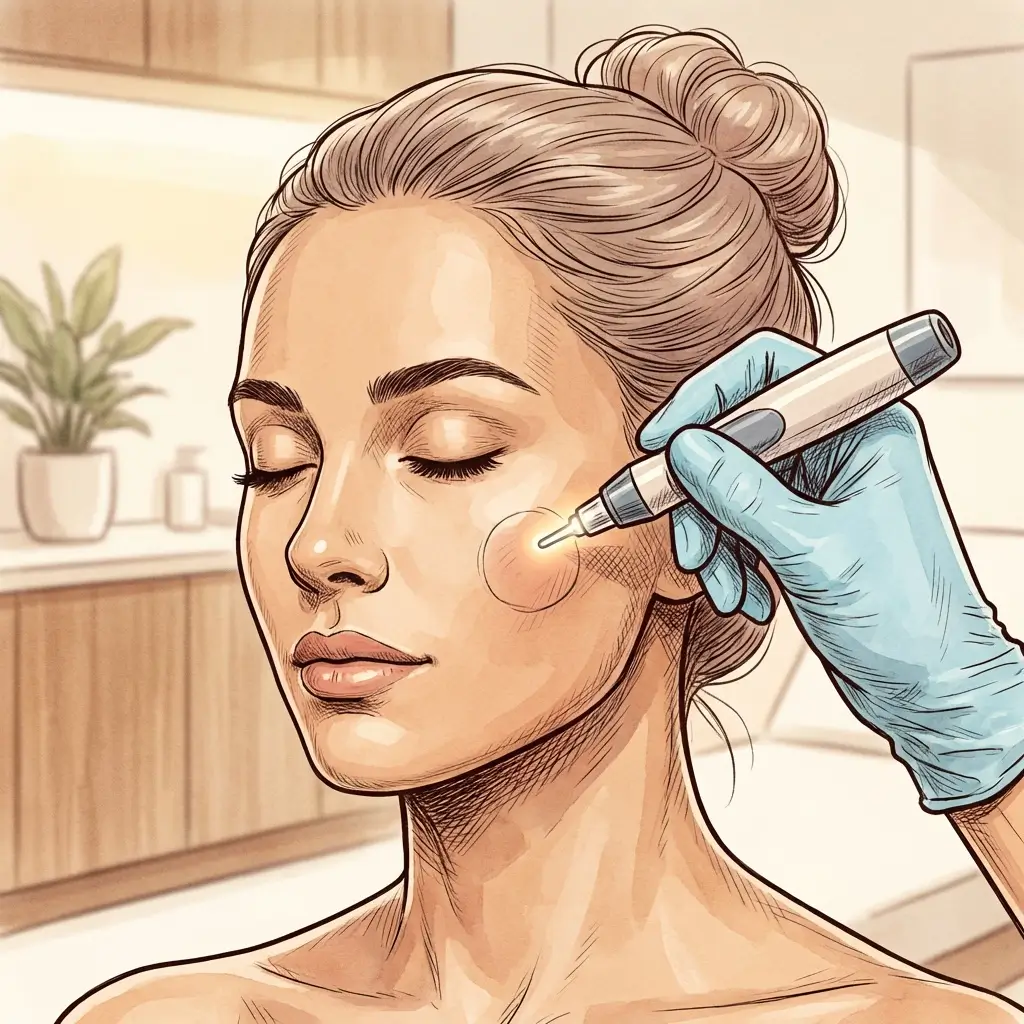
- Targeted lasers (Q-switched ruby, Q-switched Nd:YAG, picosecond lasers) can selectively break up the pigment in sun spots with high precision. These are particularly effective for well-defined spots. Results are usually visible within one to three sessions. For lighter skin, this is often the most straightforward procedural option. For melanin-rich skin, provider experience with calibrating for your skin tone is critical.
- IPL (Intense Pulsed Light) can be effective for widespread sun damage with multiple small spots. It works best on lighter skin tones. On darker skin, the risk of burns and pigment complications increases significantly. This is one treatment where skin tone genuinely determines whether it is a reasonable option.
- Chemical peels (medium-depth TCA, Jessner's) can improve sun spots as part of a broader resurfacing approach. They are less targeted than lasers but can address both the spots and the surrounding sun-damaged texture. Depth needs to be calibrated, especially for darker skin.
- Microneedling is less effective for established sun spots than the options above, but can support the treatment by improving product penetration and stimulating collagen in sun-damaged skin.
For a detailed comparison, see Lasers vs. Peels.
The melanin-rich skin consideration
Sun spots are often framed as a concern for lighter skin, and it is true that they are more common and more visible in fair to medium tones. But they do occur in darker skin, and when they do, the treatment approach requires more caution. The same laser or cryo settings that work safely on lighter skin can trigger post-inflammatory hyperpigmentation in melanin-rich skin, leaving you with a new dark mark around or on top of the original spot.
If you have darker skin and are considering procedures for sun spots, provider experience with your skin type is not a nice-to-have. It is the deciding factor.
What to avoid
- Treating sun spots like PIH and expecting the same timeline. Sun spots are structural. They do not fade on the same curve as post-breakout marks, and expecting them to leads to frustration and premature escalation.
- Aggressive at-home peels or devices. Over-the-counter peel pads and home-use laser devices are not calibrated for the depth needed to affect sun spots, but they are strong enough to irritate the skin and trigger inflammation, especially on melanin-rich skin.
- IPL on darker skin tones. This needs to be said directly. IPL is poorly suited to melanin-rich skin. The device cannot distinguish between the pigment in the sun spot and the pigment in your natural skin tone, and the result can be burns or worsening pigmentation.
- Ignoring the internal side. Sun spots are the visible endpoint of cumulative oxidative UV damage. Treating the spots without addressing the depleted internal environment that allowed them to form means new ones will keep appearing, and existing ones may darken again after treatment.
Realistic timelines
- With topicals and internal support alone: Lighter, more recent spots can show noticeable fading within 3 to 6 months. Well-established, darker spots may lighten but are unlikely to fully clear.
- With targeted procedures: Cryotherapy and laser treatments can clear individual spots in 1 to 3 sessions, with full healing taking 2 to 6 weeks per session. Some spots may need a second round.
- Prevention of new spots: This is ongoing. Cumulative UV exposure does not stop, so neither does protection. Sun spots treated successfully can return if the area continues to receive unprotected UV exposure.
The honest picture is that sun spot treatment often involves a combination approach: internal support and sun protection as the foundation, topicals for gradual improvement and maintenance, and targeted procedures for the spots that topicals cannot fully resolve.
Sun spots are the type of hyperpigmentation where patience and consistency pay off the most. They got there slowly, they clear slowly, and the maintenance that keeps them from coming back is a permanent shift, not a temporary effort.
The full approach
- Sun protection. Broad-spectrum, consistent, permanent. This is not a treatment step. It is the prerequisite for every step that follows.
- Internal support. Rebuild the antioxidant and nutritional foundation that cumulative UV has worn down. Support cell turnover and reduce the oxidative stress driving melanocyte overactivity.
- Topicals. Retinoids for turnover, tyrosinase inhibitors for production, antioxidants for protection. Introduced gradually, given time.
- Targeted procedures when needed. For spots that topicals cannot fully clear, procedures offer the most direct results. Chosen based on skin tone, spot depth, and provider experience.
- Ongoing maintenance. Sun protection and internal support continue indefinitely. Topicals can be simplified over time but not abandoned. New spots are prevented, not just treated.
The approach that holds up is the one that treats the whole picture: the internal environment, the surface, and the ongoing exposure, together.


